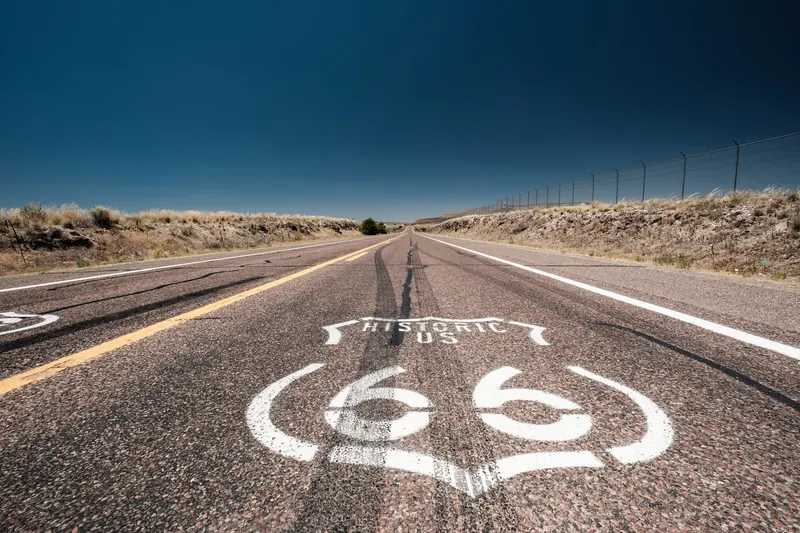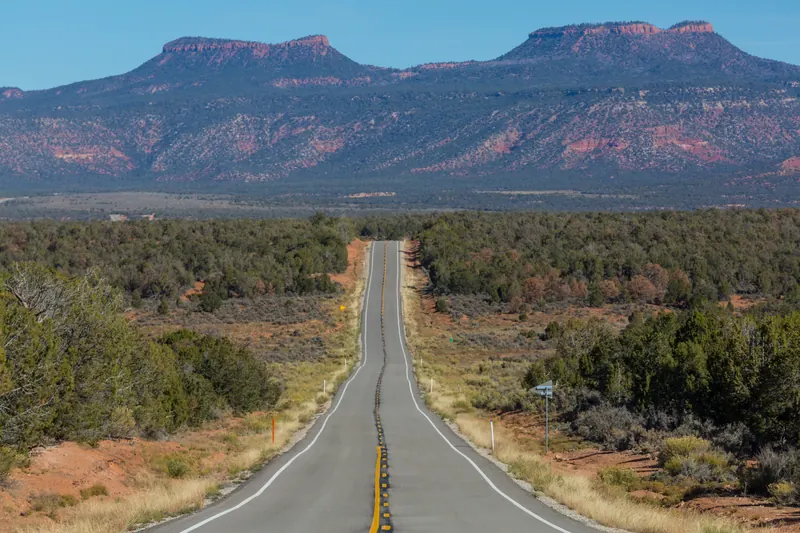
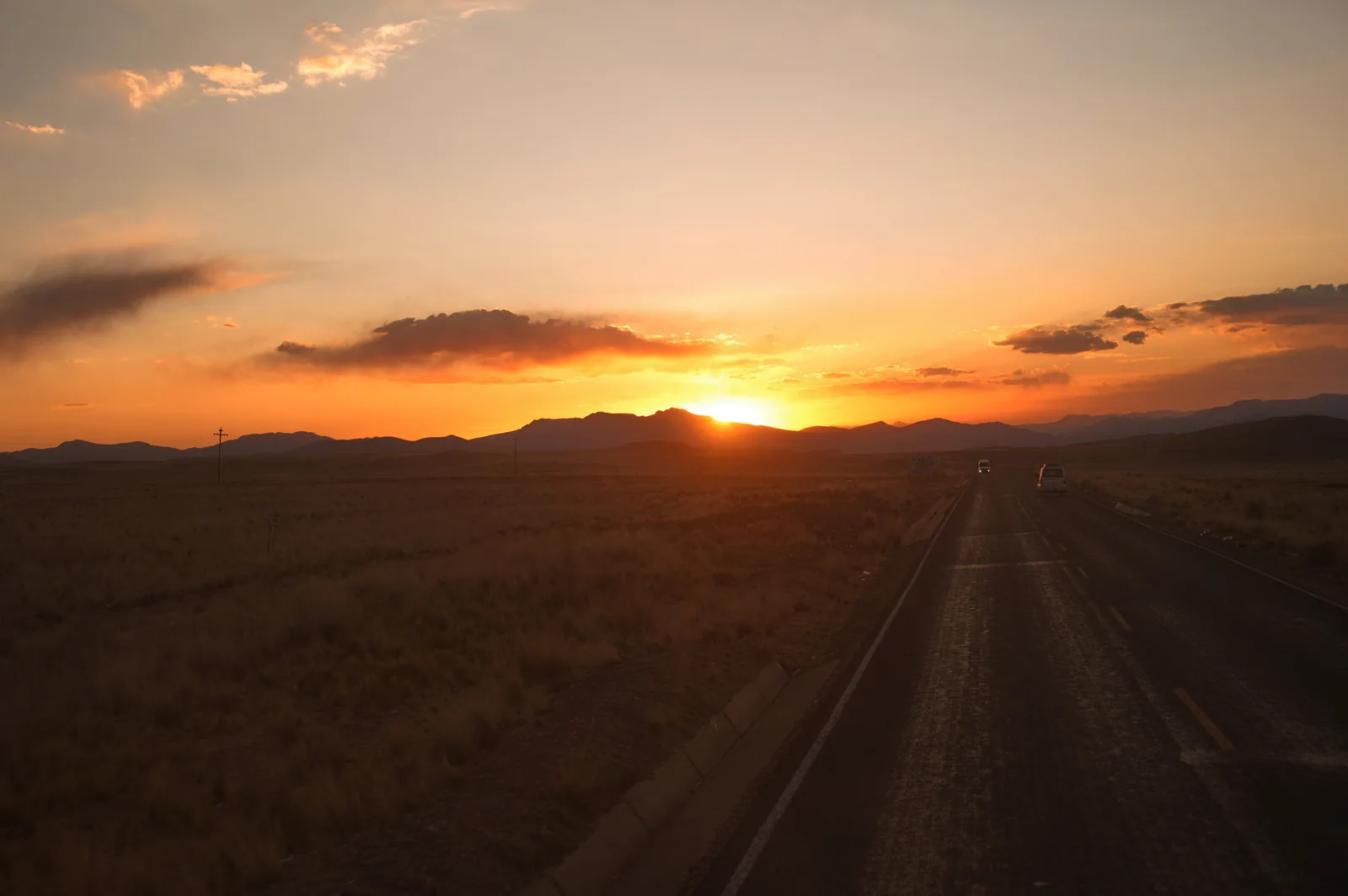
New Mexico is where Route 66 turns into light. Arizona has the preserved towns and the open miles; New Mexico has the neon, more surviving historic signage per mile than any other state on the road, plus a plot twist nobody explains simply: for its first eleven years, Route 66 did not go where you think it goes. There are two Route 66s through New Mexico, and choosing between them is the first decision of the segment.
This guide makes that decision easy, ranks the stops in the same must/nice/skip format as our Route 66 Arizona guide, prices the motor courts, and gives you the one piece of timing intelligence that changes the whole trip: the neon hour.
One State, Two Route 66s
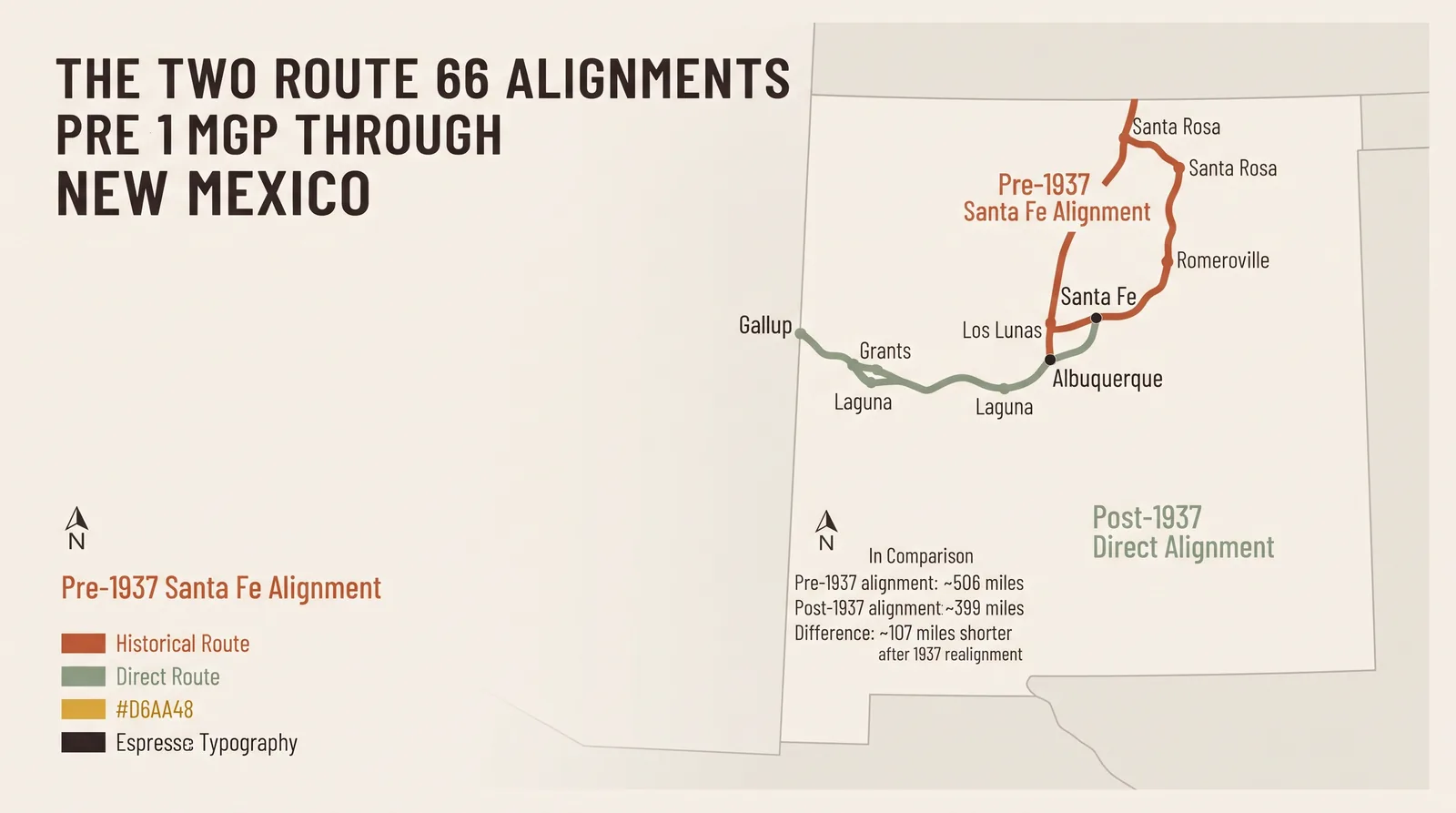
From 1926 to 1937, Route 66 took a huge northward detour: east from Santa Rosa up to Las Vegas (the New Mexico one), west through Santa Fe, then down the switchbacks of La Bajada to Albuquerque. In 1937 the road was realigned straight west through Moriarty and Tijeras Canyon, cutting the state crossing by roughly 90 miles and bypassing Santa Fe entirely.
Which one should you drive? The direct answer: take the post-1937 alignment if you have one day, and add the Santa Fe loop if you have two, because the loop trades about two extra hours of driving for the oldest state capital in the country and the adobe architecture that started an entire aesthetic. If Santa Fe is already part of your larger trip, the direct alignment loses nothing.
The Segment at a Glance
Roughly 380 miles on the direct alignment, Texas line to Arizona line, driven east to west. Same verdict format as the Arizona guide, because the two are one series.
| Stop | Miles from previous | Time on site | Verdict |
|---|---|---|---|
| Tucumcari | ~41 from the TX line | The night (see the neon hour) | Must |
| Santa Rosa (Blue Hole) | 60 | 45 min | Must |
| The Santa Fe Loop | +~75 mi vs direct | Half day | Must with 2 days; skip guilt-free with 1 |
| Albuquerque, Central Avenue | 115 direct from Santa Rosa | 2–3 hrs | Must |
| Laguna & the mesa country | 45 | Drive-through beauty | The road itself |
| Gallup (El Rancho) | ~95 | 1.5 hrs (or the night) | Must |
The Must-Stops
Tucumcari and the Neon Hour
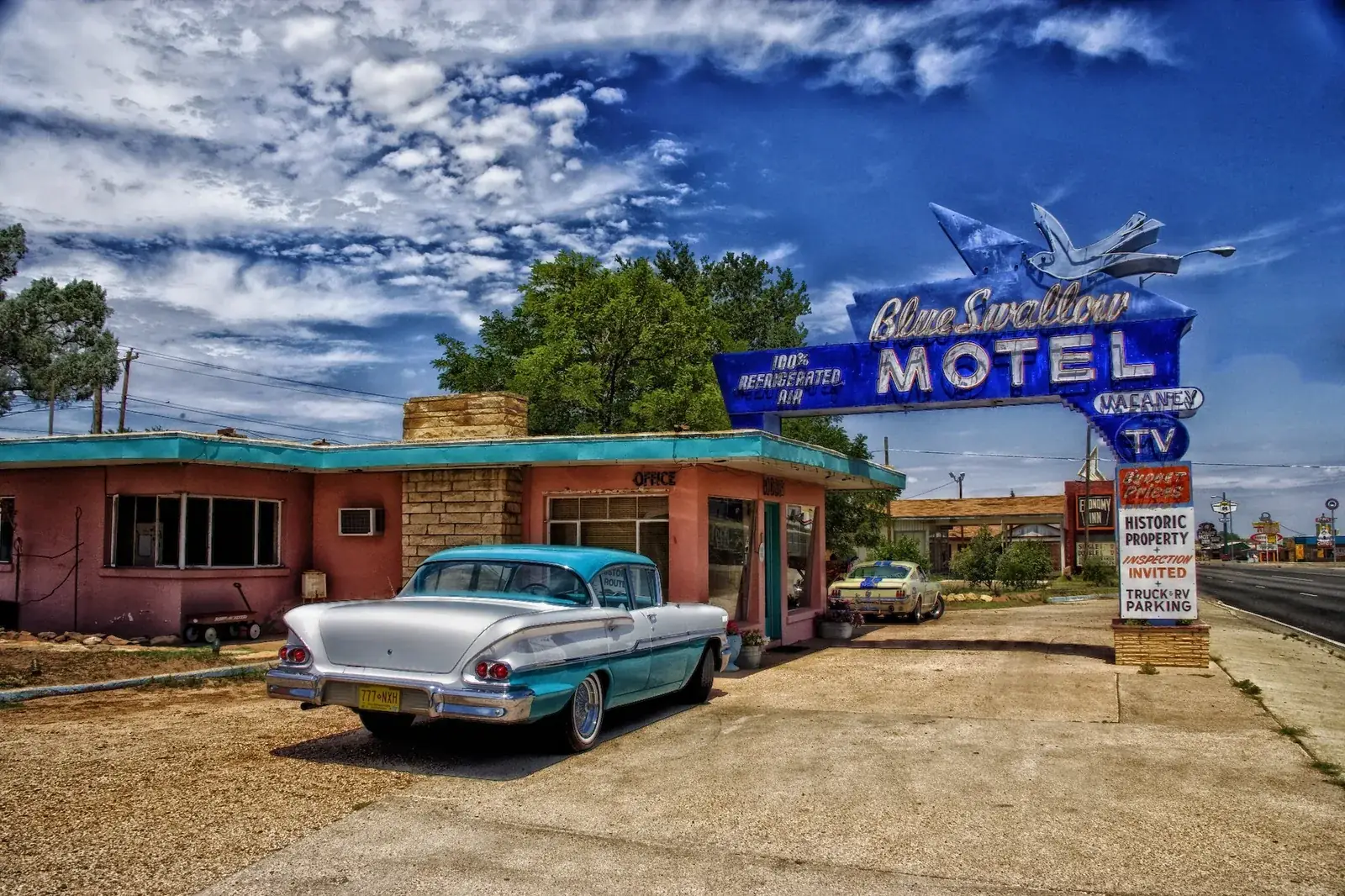
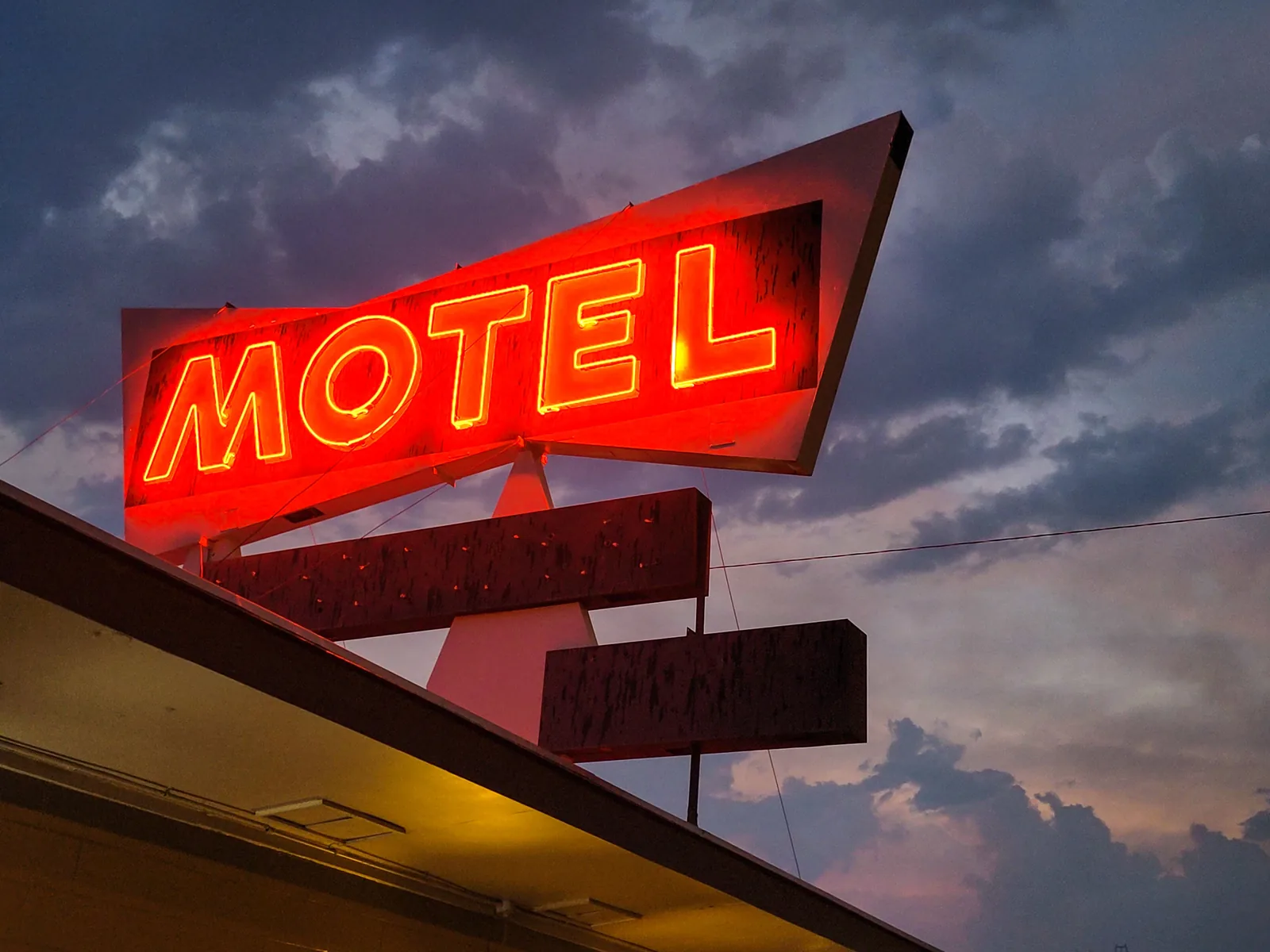
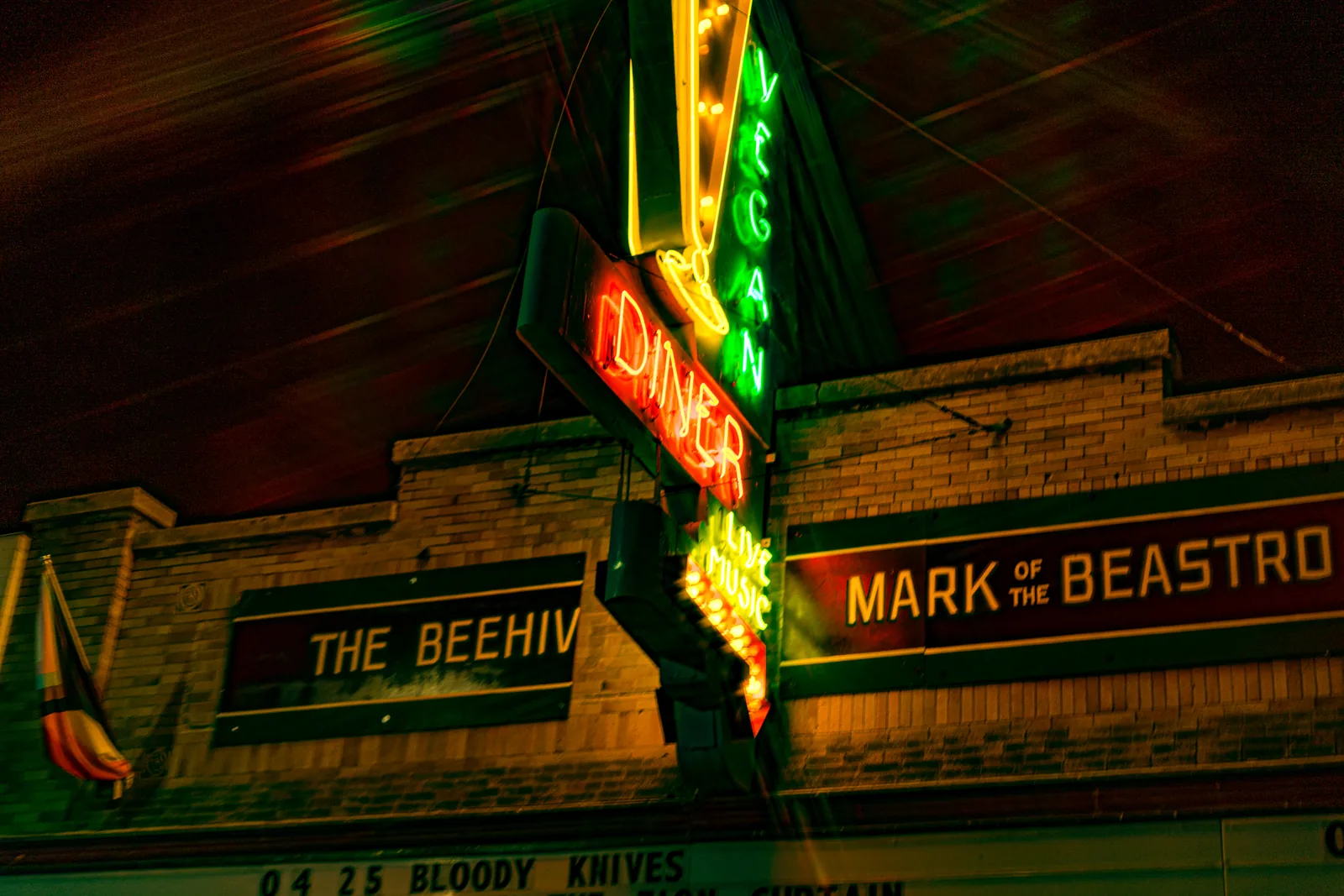
Tucumcari is the reason to schedule this whole segment around a sunset. The town’s stretch of old 66 (Route 66 Boulevard) holds the densest collection of working historic neon on the entire Mother Road: the Blue Swallow’s swooping script, Tepee Curios’ glowing tepee, Motel Safari’s camel, the Palomino, block after block.
Here is the intelligence that guidebooks skip, learned by standing on that sidewalk: the signs come on at dusk, roughly 20 to 30 minutes after sunset, and the magic window runs about 40 minutes, while the sky still holds deep blue behind the tubes. Full dark flattens the photos; the blue hour makes them. Check your sunset time, be parked on the boulevard 15 minutes after it, and walk west to east with the Blue Swallow as the finale. The whole show is free, and it is the single best photography stop between Chicago and Santa Monica.
Santa Rosa and the Blue Hole
Twenty minutes off the pace and completely worth it: the Blue Hole is an artesian spring pool about 80 feet deep, startlingly clear, and a constant cool low-60s°F year-round, which makes it a scuba training site in the middle of the high desert. Swim it in summer if you are brave, photograph it in any season, and be back on the road in 45 minutes.
Albuquerque’s Central Avenue
Route 66 runs straight through Albuquerque as Central Avenue for roughly 18 city miles, the longest urban stretch of the road anywhere. The anchor is the KiMo Theatre, a 1927 Pueblo Deco landmark that looks like art deco and adobe had the best possible argument. Add the Nob Hill district’s restored neon and, if the mood strikes, a nod to the city’s Breaking Bad pilgrimage sites, which have quietly joined the roadside canon. Two to three hours, best in late afternoon rolling into a Nob Hill dinner.
The Santa Fe Loop
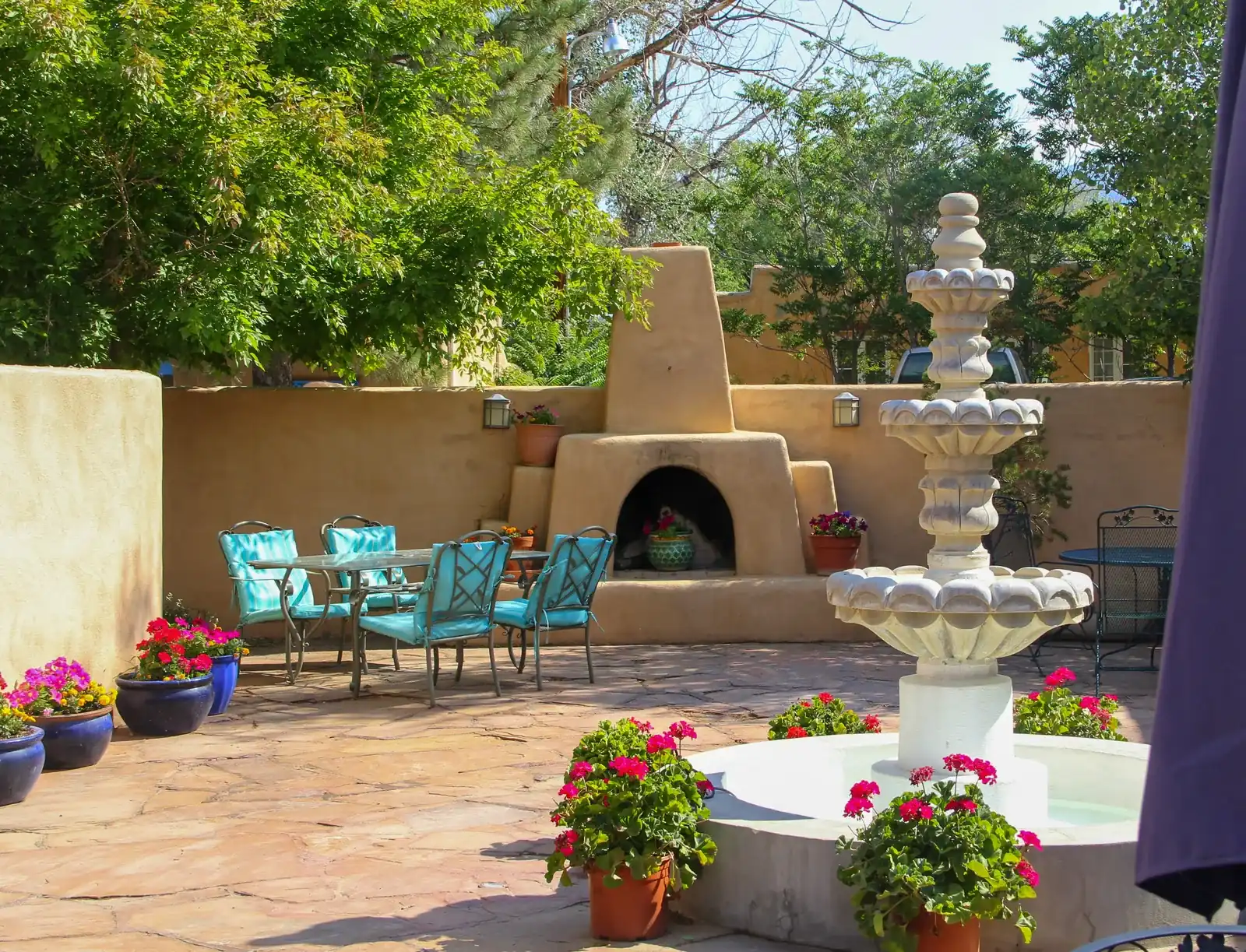
The pre-1937 alignment’s crown, and the point where this road trip and this magazine’s whole aesthetic converge. Santa Fe’s Plaza, the adobe streets, the 400-year-old architecture: this is the source material. If you have ever wondered where the look in southwestern decor done right comes from, or wanted to stand in front of the walls behind adobe-inspired walls at home, the loop is the field trip. Half a day: the Plaza, Canyon Road’s galleries, one green-chile-smothered lunch, and the drive down La Bajada mesa toward Albuquerque as the light goes gold.
Gallup and El Rancho
The western gateway, and the segment’s second-best night. The El Rancho Hotel opened in 1937 as Hollywood’s base camp for Western filming, and the lobby remains a two-story time capsule of movie-star photos, Navajo rugs, and a staircase built for entrances. Gallup itself is a real trading town, one of the most important centers for authentic Native American arts anywhere: if the buying guidance from our authentic turquoise guide has been waiting for a field application, its established trading posts are the place.
Where to Sleep (Motor Courts Ranked)
| Rank | The stay | Typical price | The note |
|---|---|---|---|
| 1 | Blue Swallow Motel, Tucumcari | ~$110–140 | The icon: 1939 rooms, garages, and that sign outside your door. Book far ahead; when I looked at a mid-week October date, the calendar was already thin four months out. Reserve the moment your dates exist |
| 2 | El Rancho Hotel, Gallup | ~$120–180 | The Hollywood lobby and the western bookend night |
| 3 | Motel Safari, Tucumcari | ~$90–120 | The savvy backup when the Swallow is full; lovingly kept, camel neon included |
Prices checked July 2026. The two-night version of this segment sleeps at the Blue Swallow and El Rancho, and that pair of nights is the whole trip in miniature: neon east, Hollywood west.
One Day or Two
One day (direct alignment): Texas line at 9, Tucumcari drive-through with a Tepee Curios stop at 10, Blue Hole at 11:30, Central Avenue and the KiMo by 2:30, mesa country light, Gallup and the El Rancho lobby by 6:30. Sleep in Gallup. You miss the neon hour, and it will bother you later; that is the honest cost of the one-day plan.
Two days (the full segment): Day 1 ends in Tucumcari deliberately: arrive by 5, check into the Swallow, dinner, then the neon walk at dusk. Day 2: Blue Hole in the morning, the Santa Fe loop through midday, La Bajada descent, Central Avenue late afternoon, El Rancho by dark. Two days turns the segment from a drive into the best-lit chapter of the whole road.
Mistakes
- Driving through Tucumcari at 1 p.m. The town’s entire magic is switched off at midday. If the schedule forces daylight, at least know what you are trading.
- Skipping the loop by default. Not taking the Santa Fe loop is a fine time decision; not knowing it existed is a planning failure. Now you know.
- Underestimating Gallup. It reads as “last town before Arizona” on the map and turns out to be the segment’s cultural heavyweight.
- Booking the Blue Swallow late. A tiny icon with a national fan base does not hold Tuesday rooms for spontaneity.
- Full-dark neon photos. Twenty minutes early beats twenty minutes late, every single time. Blue hour or bust.
FAQ
Should I take the Santa Fe loop on Route 66?
Take it if you have two days for New Mexico: the pre-1937 alignment adds roughly two hours of driving in exchange for the oldest state capital, Canyon Road, and the adobe architecture that defines the Southwest. With only one day, the post-1937 direct alignment through Albuquerque loses none of the neon-era essentials.
Is the Blue Swallow Motel worth booking?
Yes, and it is the single most in-demand bed on the Mother Road: a 1939 motor court with restored rooms, attached garages, and the most photographed neon sign on Route 66 outside your door, typically $110 to $140 a night. Book the moment your dates are fixed; its handful of rooms sell out months ahead.
How long does Route 66 through New Mexico take?
The direct alignment runs roughly 380 miles and works as one long day, Texas line to Gallup. Two days is the right answer: it buys you the Tucumcari neon hour at dusk, the Santa Fe loop, and unhurried time on Central Avenue, sleeping at the Blue Swallow and the El Rancho.
What is the best stop on Route 66 in New Mexico?
Tucumcari at dusk. The town holds the densest surviving collection of working historic neon on the entire route, and the 40-minute blue-hour window after sunset, with lit tubes against a deep blue sky, is the best free photography stop between Chicago and Santa Monica. Plan the whole segment around being there for it.
Chase the Blue Hour West
The segment in one instruction: schedule the sunset for Tucumcari, the loop for Santa Fe if you have it, and the last lobby for Gallup. Eastward, the road continues into Route 66 in Arizona; the Texas Panhandle leg is coming in Route 66 through the Texas Panhandle; and the New Mexico Route 66 Association keeps the segment’s living preservation news, worth a look before you drive.
Prices in this guide were checked at publication and are shown as typical ranges. How we check facts and prices →