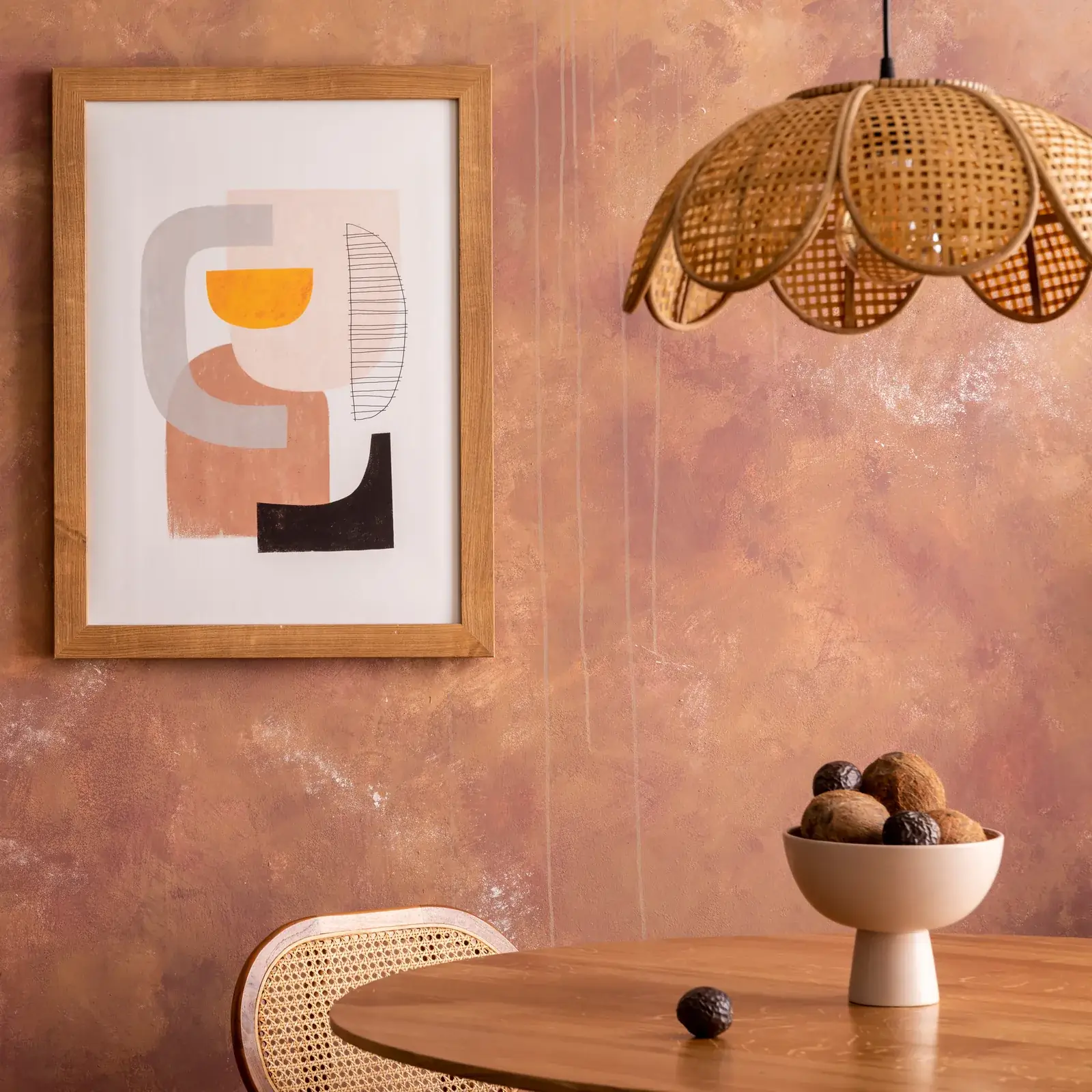
That wall you keep saving on Pinterest, the one with the soft cloudy movement that looks like a New Mexico courtyard at 5 p.m., is almost never actual adobe. It is a finish, usually limewash or Roman clay, and the entire internet will teach you how to apply one product without ever answering the question that comes first: which one, at what cost, and can you honestly do it yourself.
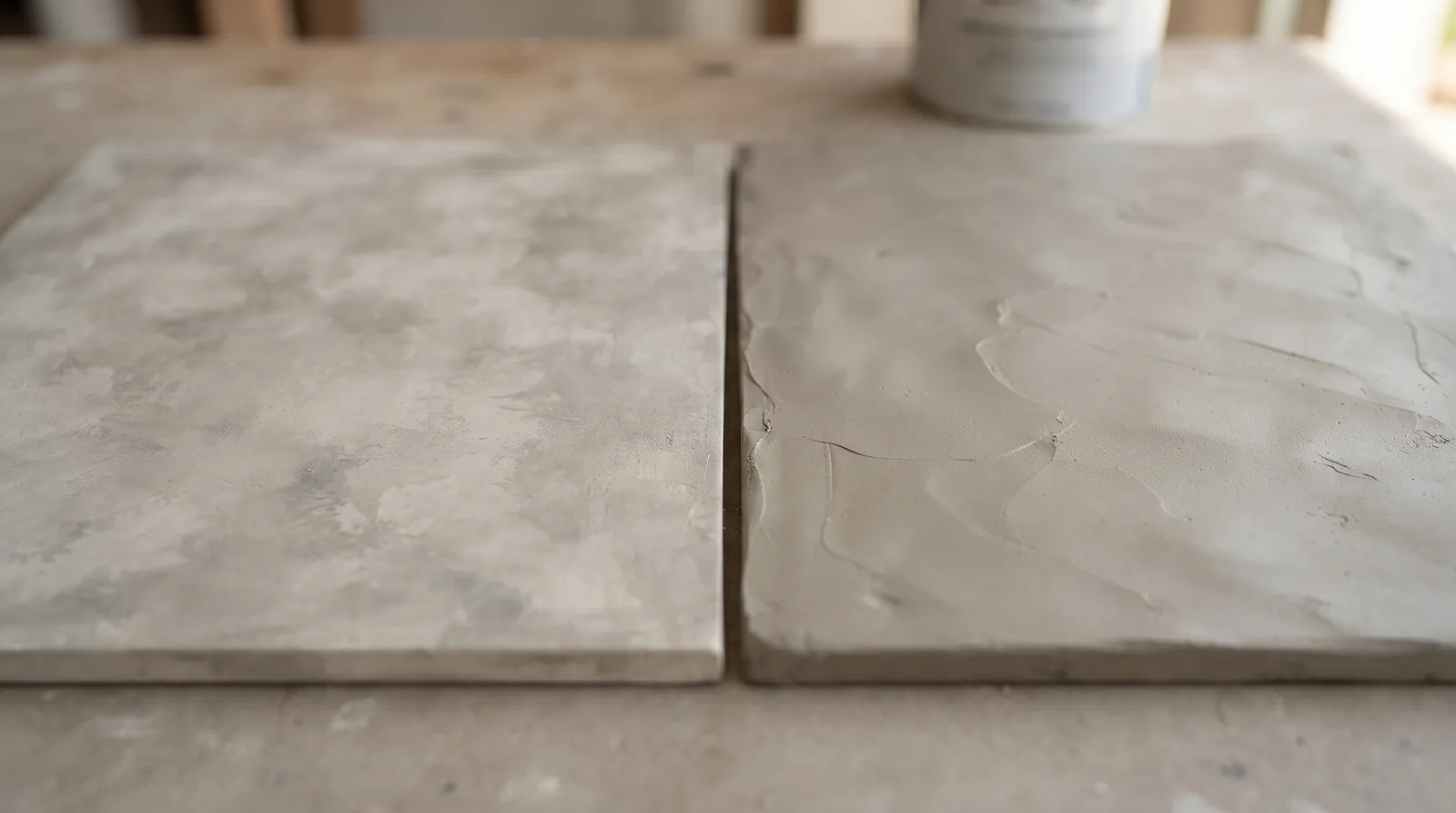
I ran the comparison the only way that settles it: two sample boards, one limewashed and one in Roman clay, same terracotta family, side by side against my office wall for a month. The verdict, the costs down to the square foot, and the one thing both boards taught me are all below. Spoiler on the lesson: the first coat of limewash will break your heart, and it is supposed to.
The Look vs the Material (30 Seconds of Honesty)
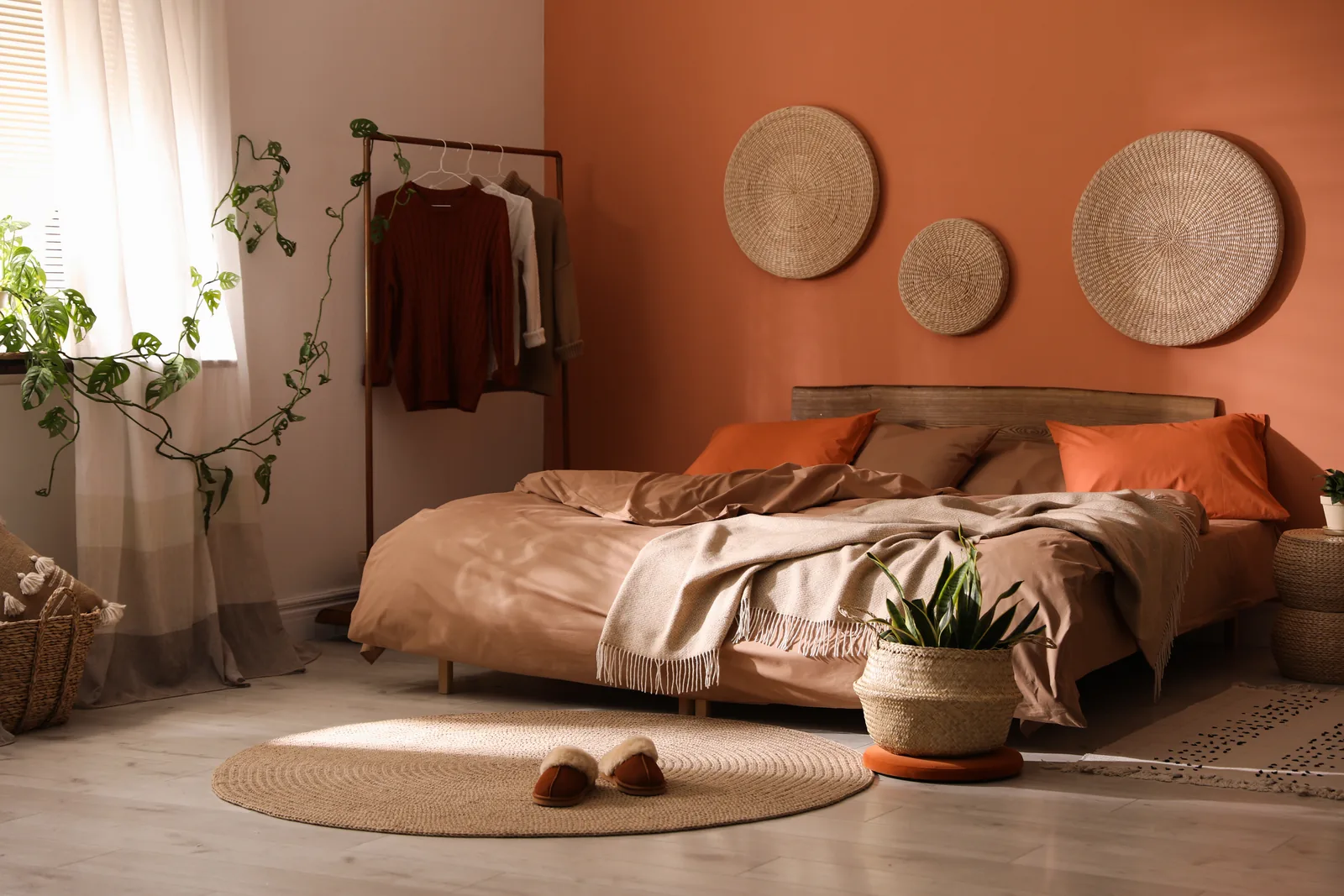
Real adobe is a structural material: sun-dried earth bricks, mud plaster, walls two feet thick. What you want for your bedroom is the adobe look: a mineral finish with soft, mottled movement that catches light the way earthen plaster does. Limewash and Roman clay both deliver it on ordinary drywall. Nobody is bricking up their hallway, and no one needs to. If you want to stand inside the real thing for calibration, the buildings that inspired all of this are on our desert road trip, and they are worth the calibration.
Two neighbors to rule out by name, because Pinterest merges them: Venetian plaster is the polished, glossy, formal cousin, and German schmear is mortar smeared over brick. Different looks, different articles.
The 3 Methods Compared
| Limewash | Roman clay | The budget fake | |
|---|---|---|---|
| The look | Soft, cloudy, matte movement | Deeper, suede-like, subtly troweled | Softly mottled, flatter |
| DIY cost / sq ft | ~$0.40–0.80 | ~$1–2 | ~$0.15–0.30 |
| Pro cost / sq ft | ~$3–8 | ~$3–8 | n/a |
| Difficulty (1–5) | 2.5 | 3.5 | 1.5 |
| Applied with | Large block brush | Putty knife / trowel | Roller + rag or brush technique |
| Durability | Very good on dry walls; can chalk if unsealed | Excellent; hardest of the three | Good; it is just paint |
| Fix a scuff | Touch-up blends invisibly | Sand + patch, blends well | Repaint the patch |
| Renter-friendly | No (mineral primer) | No | Yes |
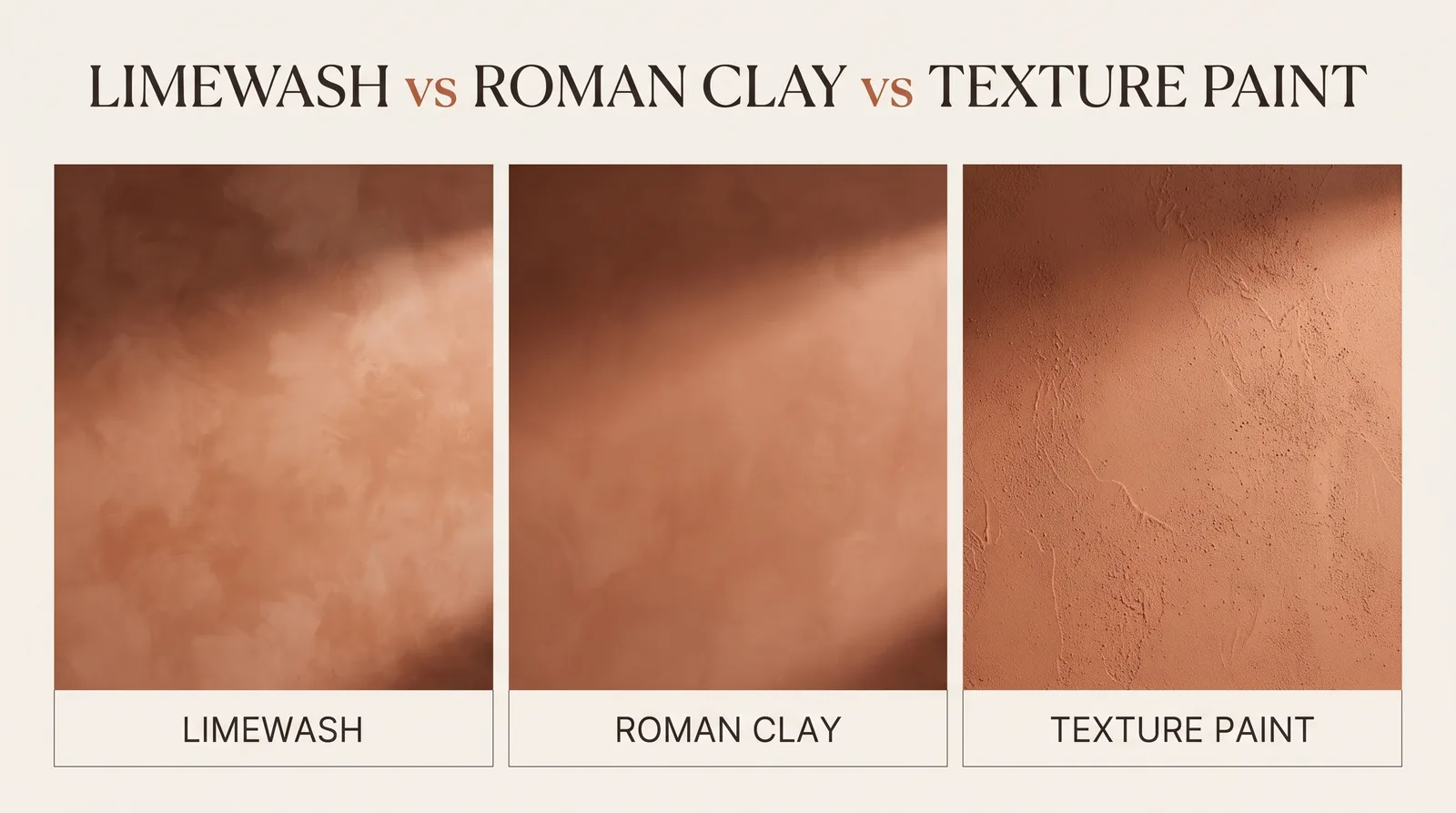
My verdict from the boards: limewash for most rooms and most people. The movement is more luminous than Roman clay’s, the brush is more forgiving than the trowel, and the cost is roughly half. Roman clay wins when you want depth you can feel with your palm and are patient with a putty knife. The fake wins when the wall is not yours to commit to.
Limewash
What It Costs (The Real 12x9 Wall)
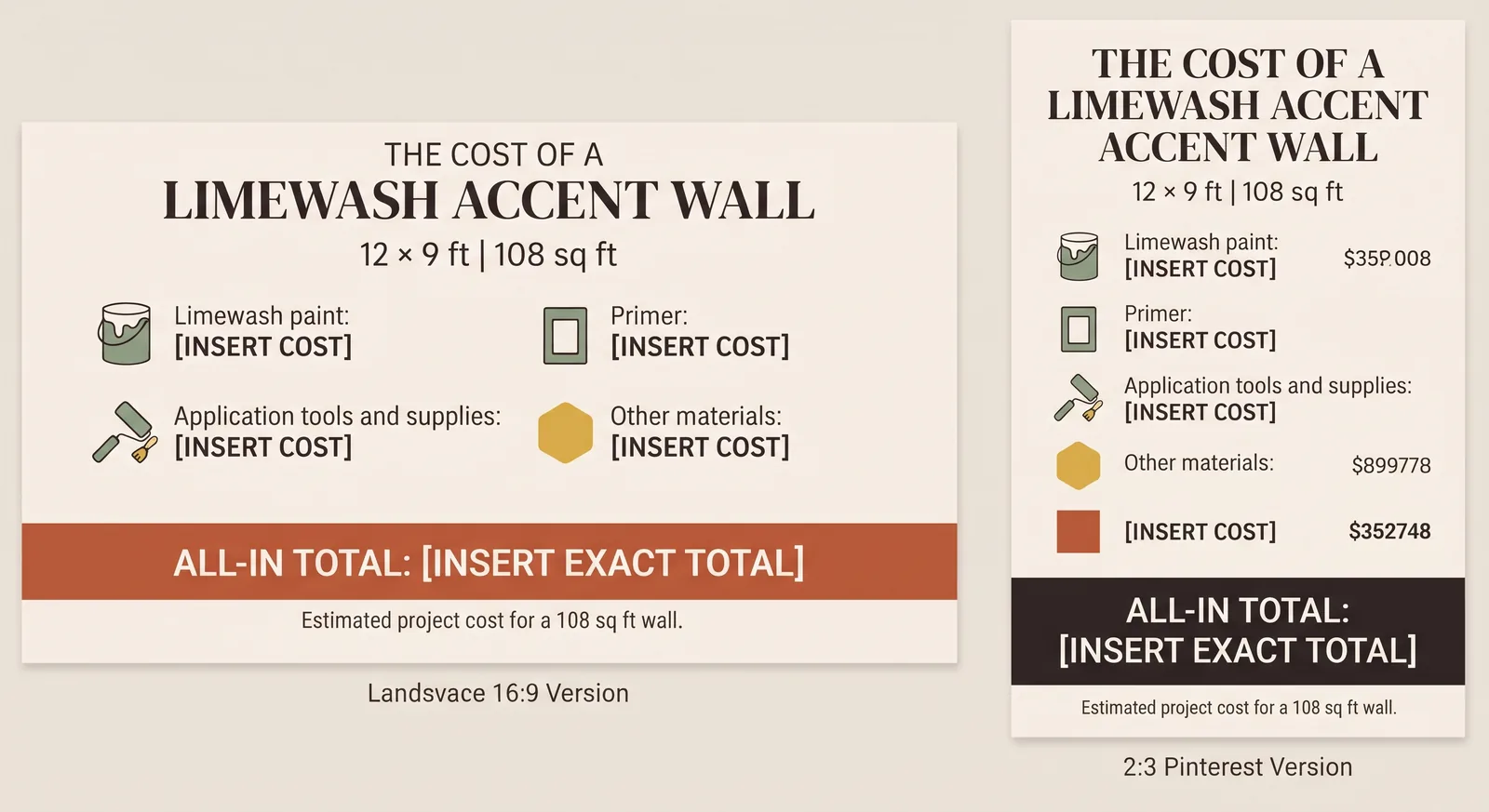
A standard accent wall, 12 feet wide by 9 feet high, is 108 square feet. Priced at typical July 2026 retail from the two reference brands, Portola Paints and Color Atelier:
| Line | Cost |
|---|---|
| Limewash, 1 gallon (covers a 108 sq ft wall in the required 2 coats, with leftover) | ~$110–130 |
| Mineral primer (required over existing regular paint) | ~$40–60 |
| Block brush | ~$20–30 |
| Drop cloth, tape, tray | ~$15 |
| Total | ~$185–235, or roughly $1.70–2.20/sq ft all-in for a first wall |
Note the honest math: the per-square-foot product cost is genuinely around $0.40 to $0.80, but the first wall carries the primer and tools. The second wall you do costs half.
How It’s Applied
The short version of the process (the manufacturer’s technical sheet is the long version, and reading it is not optional):
- Prime with the brand’s mineral primer over existing paint and let it cure fully.
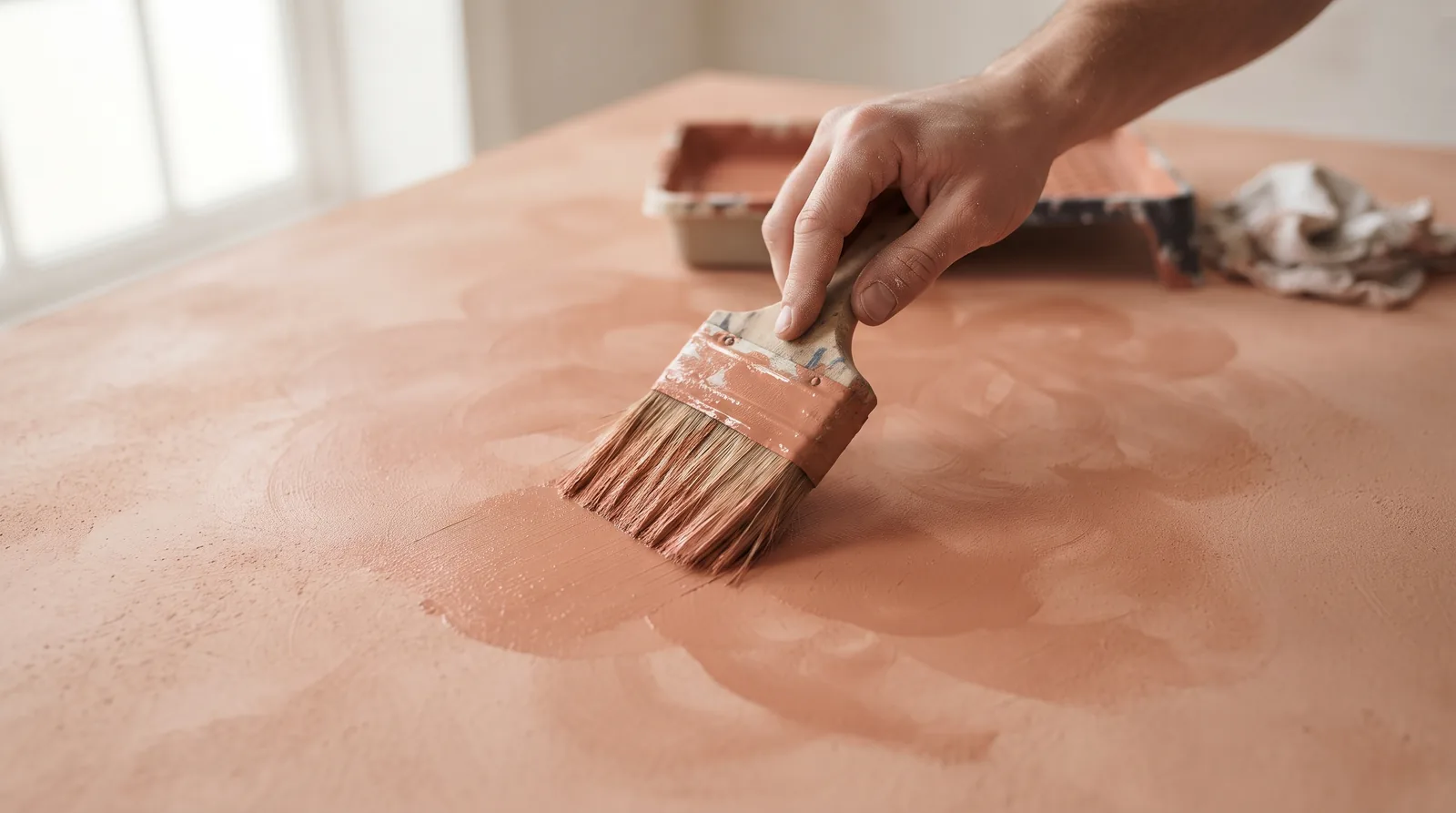
- Cut in edges lightly, then apply the first coat with the big block brush in loose, criss-crossing cloud strokes, not rows.
- Stand back and do not panic. Which brings me to my sample board: the first coat dried patchy, streaky, and frankly ugly, and I nearly wrote the method off that afternoon. The second coat is where limewash becomes limewash. The clouds deepen, the streaks become movement, and the wall suddenly looks like it was always this way. Trust the second coat. Every limewasher learns this once.
- Apply the second coat with the same loose strokes once the first is dry. In splash-adjacent zones, add the brand’s sealer.
Colors That Read Adobe
Limewash brands mix their own palettes, but the target is the same family as our paint guide: earthy terracottas in the LRV 20 to 35 zone read most convincingly adobe, with warm creams above LRV 70 for surrounding walls. Match your limewash pick against the shades in terracotta paint names and keep the whole room inside the Sunbaked palette.
Roman Clay
The thicker sibling: a smooth clay-based paste applied with a putty knife in overlapping strokes, sanded lightly, and optionally sealed. The result is deeper and more tactile than limewash, closer to true plaster, with a suede-like matte that reads expensive from across the room.
The condensed numbers for the same 108 sq ft wall: product ~$120–150, the same primer, a putty knife set (~$15), and more of your weekend, because the trowel work is slower and the learning curve is real. Call it ~$200–260 all-in and a difficulty of 3.5 out of 5. On my board, the clay’s depth genuinely beat the limewash under lamplight; the limewash beat it in morning sun. If your wall lives by a window, that is your tiebreaker.
The Budget Fake (Texture Technique)
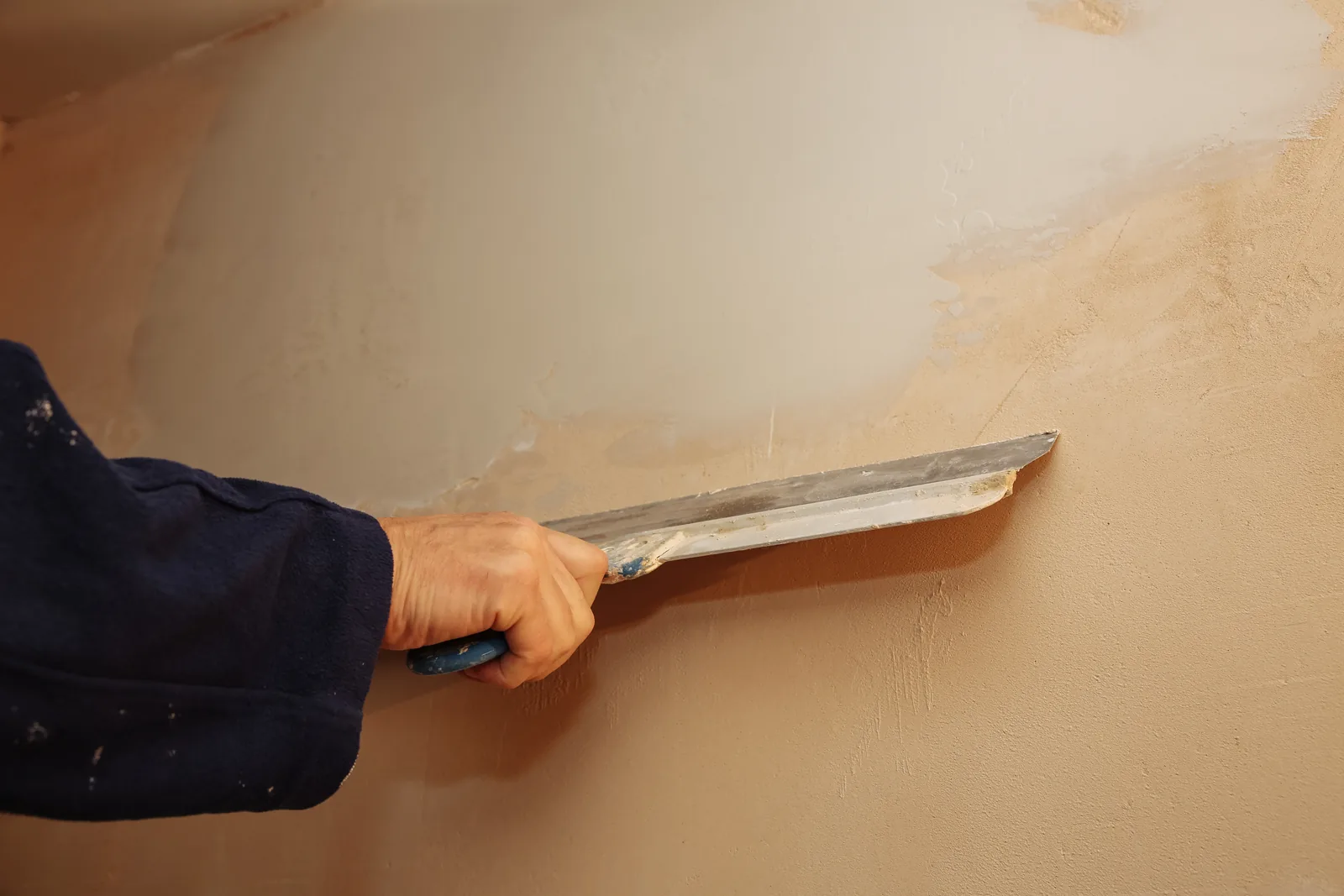
For renters and the commitment-averse: ordinary matte paint in two closely related terracotta shades (one base coat, then the second shade brushed or ragged loosely over it while referencing limewash photos) gets you 70 percent of the look for the price of paint, roughly $0.15 to $0.30 per square foot, and it repaints away when you move out. It will not have limewash’s mineral luminosity, and up close it reads as technique rather than material. From the doorway, with the right terracotta, it absolutely reads adobe. Difficulty 1.5, regret risk near zero.
Where NOT to Do This
- Bathrooms without real ventilation. Constant humidity and unsealed mineral finishes end badly. A powder room, fine; a steamy family bathroom, only Roman clay plus sealer, and even then think twice.
- Kitchen splash zones. Behind the stove and sink wants tile, not finish.
- Narrow high-traffic hallways. Unsealed limewash can chalk slightly against a shoulder brushing past daily. Seal it or pick a wall bodies do not touch.
- Kids’ room impact walls. Roman clay patches well, but the wall behind the soccer net is a repaint-grade wall by design.
- Any wall you have not sample-boarded. Not a room, but the biggest not of all.
Mistakes
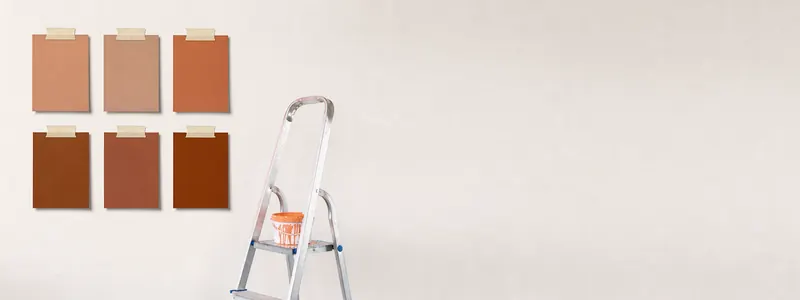
- Skipping the sample board. Two square feet of cardboard costs $15 in product and prevents the $235 regret. It is also the only way to see your color in your light.
- Judging the first coat. See above. The heartbreak is part of the process, and quitting at coat one is the most common way the method “fails.”
- Skipping the mineral primer over regular paint. Limewash needs a mineral surface to bond and develop its movement. Straight onto satin latex, it slides and blotches.
- Working in tidy rows. The movement comes from loose, random, cloudy strokes. Rows read like a paint job; clouds read like a wall.
- Buying one quart “to start.” Coverage runs out mid-wall, the new batch dries a hair different, and the seam shows forever. Buy the whole wall’s worth at once.
FAQ
What is the difference between limewash and Roman clay?
Limewash is a thin, brushed mineral paint that dries with soft, cloudy, luminous movement; Roman clay is a thicker paste applied with a putty knife for a deeper, suede-like, subtly troweled finish. Limewash is cheaper (around $0.40 to $0.80 per square foot DIY versus $1 to $2) and easier; Roman clay is more durable and more tactile.
Can you limewash over regular paint?
Yes, with one non-negotiable step: a coat of mineral primer first. Limewash needs a mineral surface to bond to and develop its movement; applied directly over standard latex paint it slides, blotches, and can rub off. Prime, let it cure fully, then apply two loose coats of limewash.
How much does a limewash wall cost?
For a typical 12 by 9 foot accent wall, expect around $185 to $235 all-in for a first DIY wall: roughly $110 to $130 for a gallon of quality limewash, $40 to $60 for mineral primer, and about $50 in brush and supplies. Professional application typically runs $3 to $8 per square foot.
Does limewash rub off?
Unsealed limewash can chalk very slightly against daily contact, which is why high-touch hallways and splash zones want either the brand’s sealer or a different wall. On normal walls the finish is stable, ages beautifully, and touch-ups blend invisibly, which is one of limewash’s quiet advantages over regular paint.
Board First, Wall Second
The entire decision fits on two square feet of cardboard: sample both methods in your color and your light, trust the second coat, and then commit to the wall. The color side of the decision is already solved in the terracotta paint guide, the room around the wall is in southwestern decor ideas, and the finished wall becomes the backdrop for everything else in the style.
Prices in this guide were checked at publication and are shown as typical ranges. How we check facts and prices →