Turquoise is having its biggest moment in decades, and it arrives carrying two questions disguised as one. The first is styling: how much is right, and with what. The second almost nobody answers: what is that stone actually made of, because a meaningful share of what sells as “turquoise” is dyed howlite that has never seen a turquoise mine.
I learned the second question the expensive way. A few years ago I grabbed a “great deal” at a roadside stand outside Albuquerque: a chunky blue cuff for $30. Within a year the color had gone chalky at the edges where it rubbed, and an acetone swab on the back lifted blue onto the cotton. Dyed howlite. That cuff is why the home tests section of this article exists, and why my actual turquoise, a stabilized Kingman cuff I bought from a stamped silversmith’s booth in Santa Fe for around $140 six years ago, gets worn weekly and still looks like the day I bought it.
So this guide does both jobs: five ways to wear the stone, then the honest buyer’s education the fashion articles skip.
The One-Statement Rule
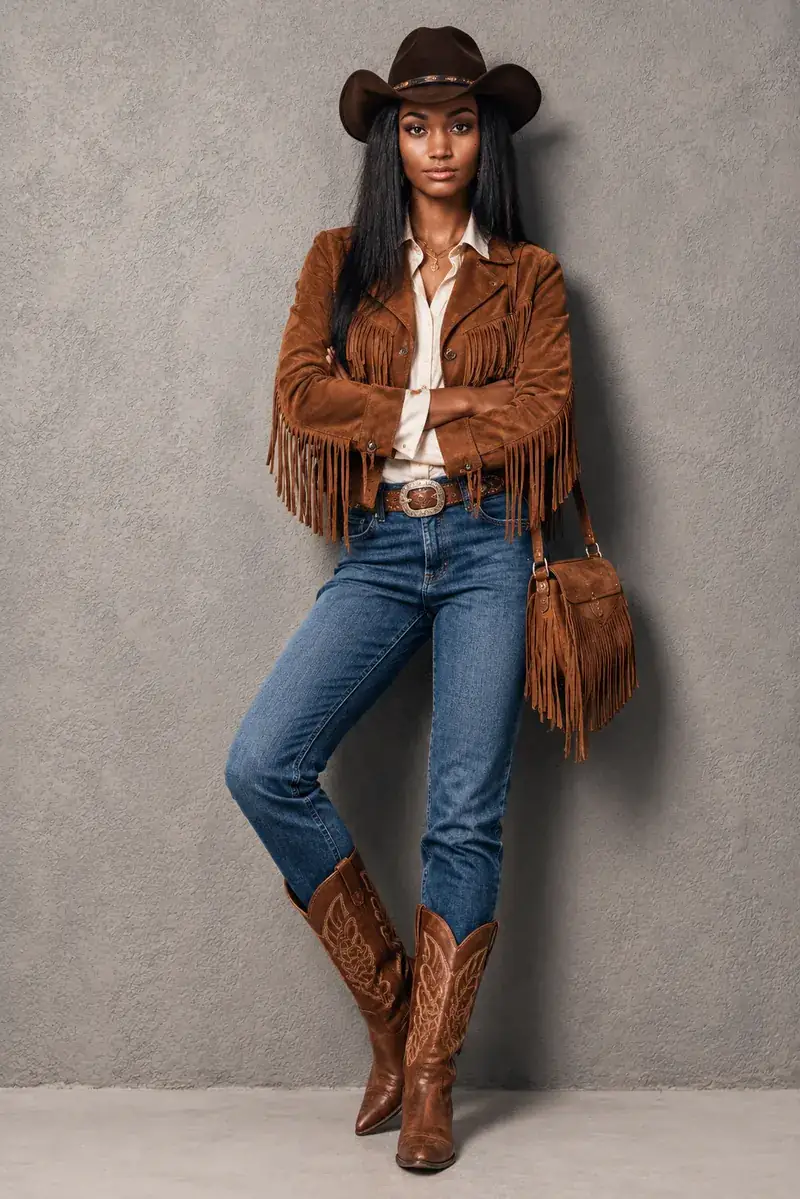
Turquoise styling has one rule: wear one statement piece and let everything else stay quiet. A squash blossom over a white tee, or stacked cuffs on one bare wrist, never both at once. Turquoise carries so much color and history per square inch that a single piece finishes an outfit, and a second one starts an argument. It is the same logic as the whole western chic starter guide: intensity is chosen, not accumulated.
5 Ways to Wear It
1. With Denim and a White Tee
The reference formula. One serious piece (necklace or cuff) over the plainest possible base. The blue reads loudest against white, and denim gives it context without competing. Occasion: everywhere, always. Budget for the piece: from $60 stabilized to whatever your heart survives.
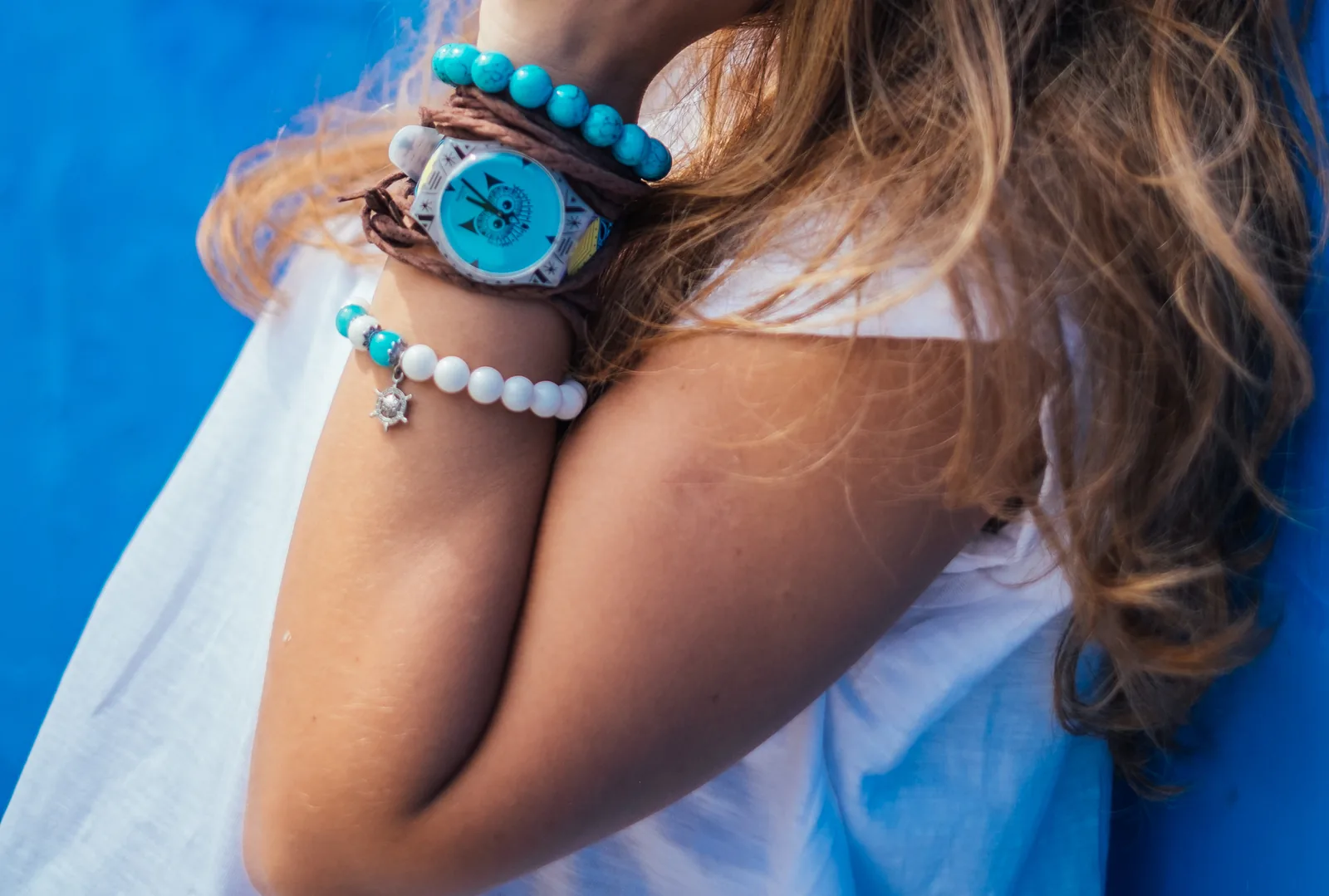
2. Stacked Cuffs
The exception that proves the one-statement rule: a stack of two or three cuffs on one wrist counts as a single statement, because the eye reads the stack as one object. Keep the other wrist and the neckline completely bare. Occasion: dinners, concerts. Budget: build slowly, one cuff a year; that is how the stack earns its collected look.

3. The Squash Blossom Moment
The squash blossom necklace, the crescent-pendant design developed by Navajo (Diné) silversmiths in the late 1800s, is the most powerful piece in western jewelry, and it needs the room to itself. Wear it over a solid crew neck, a plain dress, or an open collar, hair up or back. Nothing else. Occasion: the events that deserve it. Budget: authentic vintage and Native-made pieces typically start around $500 and climb well past $1,500; this is heirloom territory, bought once.
4. Everyday Studs and Rings
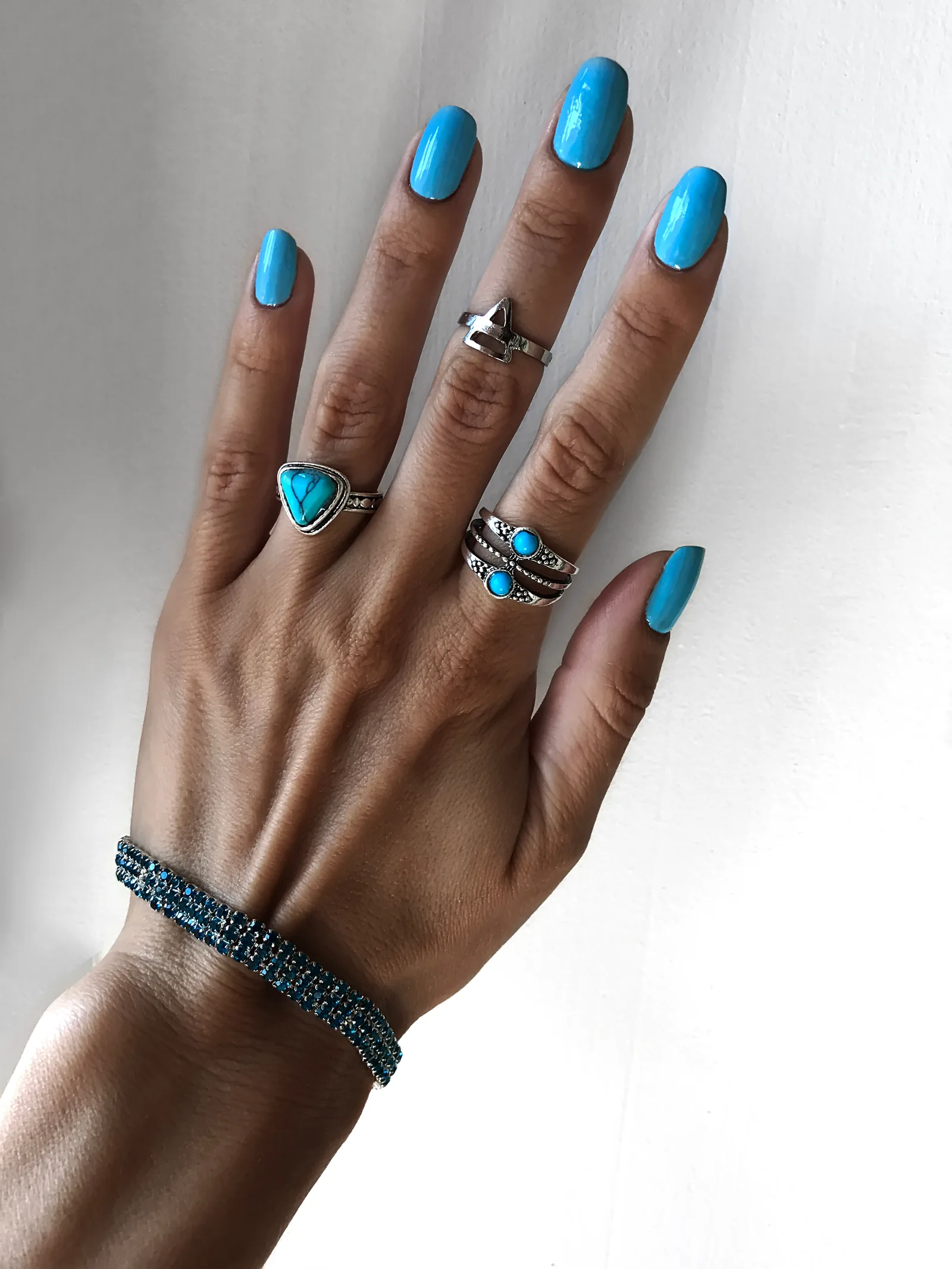
The low-commitment lane: small turquoise studs or a single stone ring add the color at whisper volume and pass the one-statement rule automatically. Occasion: office, daily. Budget: $40 to $120 gets genuine stabilized stones in sterling; below that, read the buying section carefully.
5. With Suede and Neutrals
Turquoise against tan suede and cream is the full Sunbaked chord: the stone supplies the only cool note in a warm field and glows for it. One cuff or pendant with a suede jacket and neutral knits. Occasion: fall, date nights, Nashville weekends. Budget: the piece you already bought for formulas 1 through 4.

What You’re Actually Buying
This is the section the fashion roundups skip, and it is the difference between an heirloom and my $30 mistake.
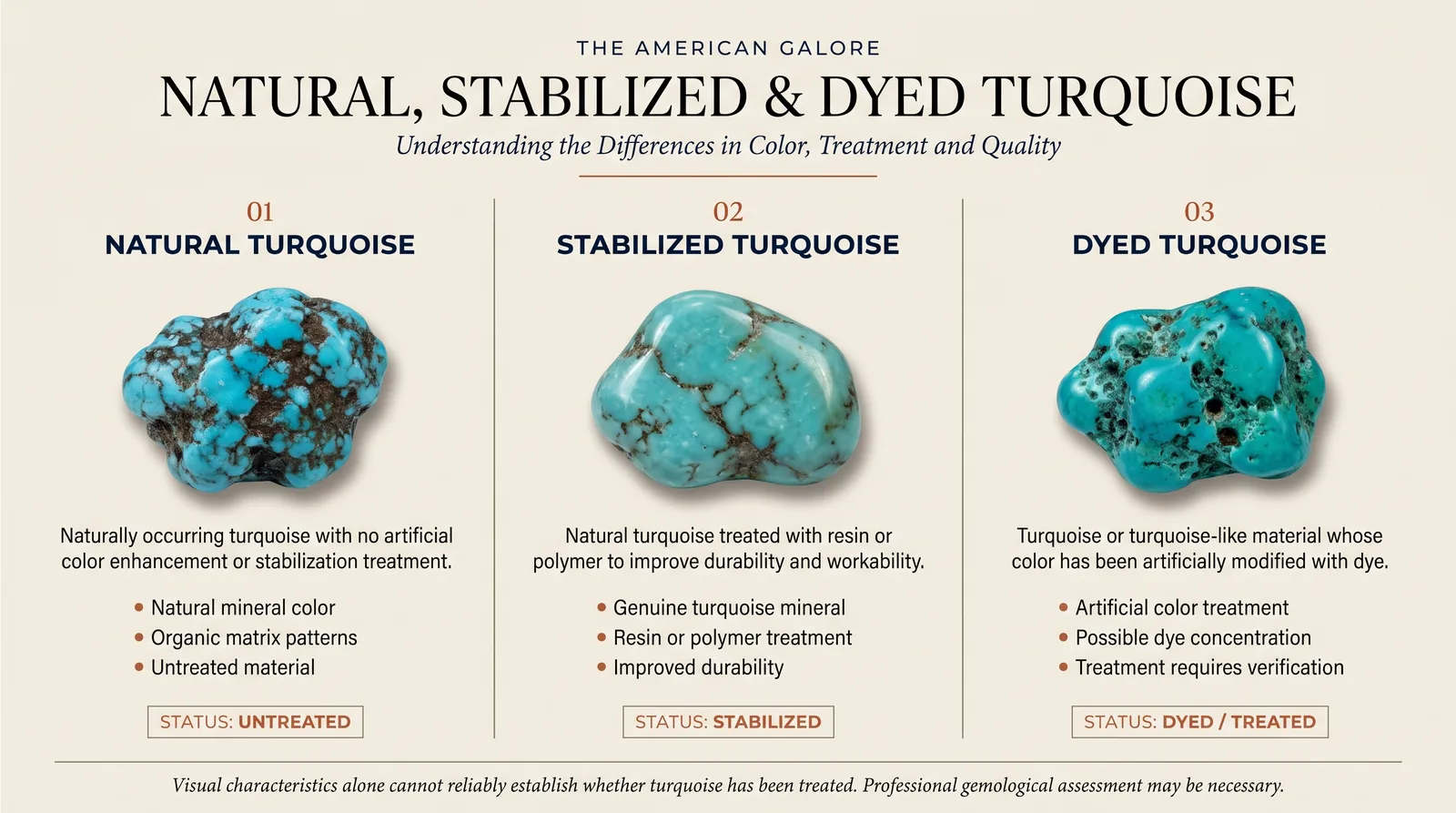
Natural Turquoise
Stone straight from the mine, cut and polished, nothing added. It is rare: only a small fraction of mined turquoise is hard enough to use untreated, which is why natural stone from named American mines (Kingman in Arizona still produces; Sleeping Beauty closed in 2012 and its clear sky-blue stones have climbed ever since) commands the top of the market. Natural turquoise is porous and will deepen slightly with years of wear. That patina is a feature.
Stabilized Turquoise (and Why It’s Not a Scam)
Real turquoise infused with clear resin to harden it. This is the majority of the honest market, and there is nothing wrong with it: the stone is genuine, the color is its own, and stabilization is disclosed by reputable sellers because it is the reason the piece survives daily wear. My six-year-old Kingman cuff is stabilized, and I would buy stabilized again without hesitation. What matters is the word being said out loud at purchase.
Dyed Howlite and Imitations
Howlite and magnesite are soft white stones with turquoise-like veining that take blue dye beautifully, which is why they impersonate turquoise so well at $15 to $40. Sold honestly as “dyed howlite,” fine. Sold as “turquoise,” it is the roadside cuff story. Block plastic “turquoise” is the floor below that.
| Category | Typical price | How to recognize it | For whom |
|---|---|---|---|
| Natural, Native-made, signed | $200–1,500+ | Artist stamp, mine named, seller documents it | The heirloom buy |
| Stabilized, genuine | $60–200 | Disclosed as stabilized, sterling settings, honest matrix variation | The everyday sweet spot |
| Dyed howlite / imitation | $15–40 | Too-uniform color, dye lifts with acetone, price too good | Fine if labeled honestly; avoid if sold as turquoise |
The three home tests, in the order I now run them on any tempting piece:
- The price test. Genuine turquoise in sterling has a floor. A “turquoise” statement cuff at $25 is answering the authenticity question for you.
- The acetone swab. On an inconspicuous spot, a cotton swab with nail polish remover. Blue on the cotton means dye. This is the test that convicted my Albuquerque cuff.
- The look test. Natural and stabilized stones vary: matrix veining, slight color shifts across the stone. Dyed howlite tends toward suspiciously even color with dye pooling darker in the surface cracks. Perfect is the tell.
Buying Authentic Native American Jewelry
Here is the question readers ask quietly: is it OK to wear a squash blossom if you are not Native? The considered answer is yes, wear it, and buy it right. Turquoise and silver work is a living art economy for Navajo, Zuni, and other Native silversmiths, and the respectful move is not abstaining; it is putting your money into authentic work instead of the fast-fashion knockoffs that drain it.
The law is on your side here. The Indian Arts and Crafts Act, a federal truth-in-advertising law, makes it illegal to sell any item as Native American made when it is not; the Indian Arts and Crafts Board at the Department of the Interior publishes buying guidance worth reading before a big purchase. In practice: buy from the artist or from certified markets and cooperatives (the Santa Fe Indian Market, museum shops, established trading posts that name their artists), look for the artist’s stamp or hallmark on the silver, and ask for the artist’s name and the stone’s origin. A seller who has those answers is the seller you want. “Native-style” at a mall kiosk for $12 is the phrase to walk away from, both ethically and materially.
Style note for precision’s sake, because the traditions differ and deserve their names: Navajo work tends toward substantial silver and larger stones; Zuni silversmiths are renowned for needlepoint and petit point inlay of many small stones. Knowing which you are holding is part of the pleasure.
Care (It’s a Porous Stone)
- Perfume, hairspray, and lotion go on first; the jewelry goes on last. Turquoise absorbs, and absorbed cosmetics dull it permanently.
- No swimming, no dishes, no showers with it on. Water and chlorine are the enemies of both stone and stabilization.
- Wipe with a soft dry cloth after wearing. Skip every jewelry-cleaning solution.
- Store it out of direct sun; prolonged heat can shift color.
- Sterling settings will patina. A silver cloth restores shine; on older pieces, many collectors let the recesses stay dark on purpose.
Mistakes
- Stacking statements. Squash blossom plus cuffs plus concho belt is three arguments in one outfit. One statement, quiet everything else.
- Perfume directly onto the stone. The most common way good turquoise gets ruined, and it is invisible until it is permanent.
- The $12 “Native-style” buy. It funds the knockoff economy, breaks in months, and the phrase itself is the red flag the law was written about.
- Assuming stabilized means fake. It means durable and honest, at a price real people can pay.
- Ignoring the stamp. Signed work holds value and story. Two minutes of asking at purchase is the whole diligence.
FAQ
How can you tell if turquoise is real?
Run three checks: price (genuine turquoise in sterling has a floor; $25 statement pieces are answering for you), an acetone swab on a hidden spot (dye lifts blue onto the cotton), and appearance (natural and stabilized stones show varied matrix and tone, while dyed howlite runs suspiciously uniform with dye pooling in surface cracks).
Why is turquoise jewelry so expensive?
Because gem-grade natural turquoise is genuinely rare: only a small share of mined stone is hard enough to use untreated, celebrated American mines like Sleeping Beauty have closed, and authentic Native-made pieces carry skilled silversmith labor. Stabilized genuine turquoise at $60 to $200 is the honest middle of the market.
Is it OK to wear turquoise if you’re not Native American?
Yes. Wearing turquoise is welcomed; what matters is buying authentically. Purchase Native-made work from artists, certified markets, or sellers who name the artist and stone origin, as protected by the federal Indian Arts and Crafts Act, and avoid mass-produced “Native-style” imitations that undercut the artists.
What does stabilized turquoise mean?
Stabilized turquoise is genuine turquoise infused with clear resin to harden the naturally porous stone for daily wear. It is not an imitation; it is the majority of the honest market and the practical choice for jewelry worn often. Reputable sellers disclose stabilization, which is itself a mark of a trustworthy purchase.
One Stone, Worn Right
The whole guide in a sentence: one statement piece, bought honest, kept dry, worn for decades. My Santa Fe cuff cost less than a fast-fashion haul and has outlived six of them. Build the outfit under it with the western chic starter guide, put the right boots below it with how to wear cowboy boots, and if the palette on your walls should match the one on your wrist, that story is in southwestern decor, the palette worn at home.
Prices in this guide were checked at publication and are shown as typical ranges. How we check facts and prices →