The saddest sentence in fall travel is “you should have been here last week.” Every October, people book the right mountain town in the wrong week, drive five hours, and stand under bare branches while a gas station clerk tells them the color was unreal seven days ago. The problem is almost never the destination. It is the date.
Most foliage articles hand you a list of pretty places and leave the timing to luck. This one works the other way around. Below you will find one master table matching each week of the season to the regions actually peaking then, six road trips tied to their exact windows, and a plan-B rule for the trips that miss anyway. Pick your free weekend first. Then let the calendar pick your destination.
How Peak Timing Works (The 60-Second Version)
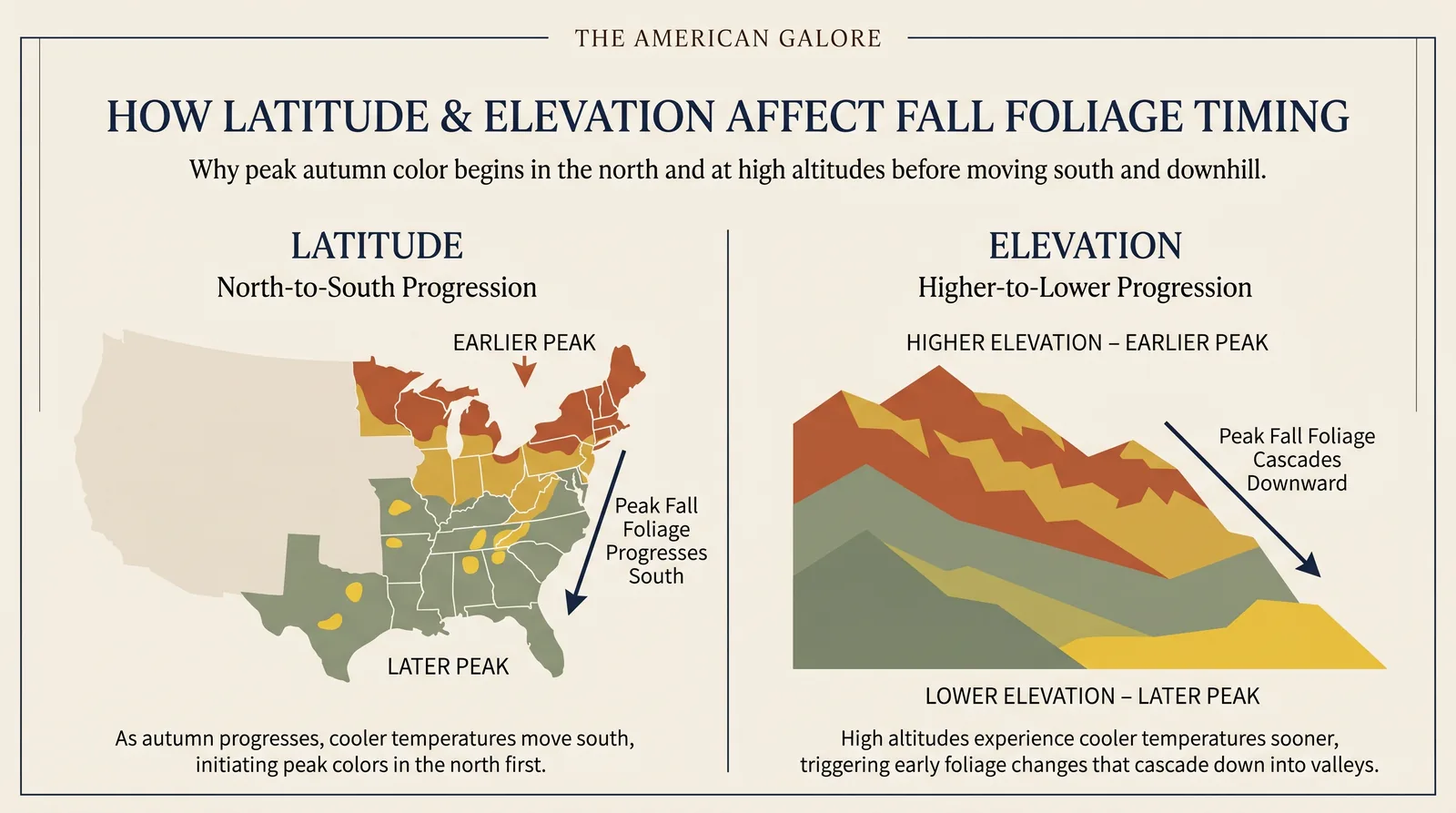
Peak foliage timing comes down to two things: latitude and elevation. The farther north a tree grows and the higher it sits, the earlier its color turns. That is why northern Vermont peaks weeks before Tennessee, and why a mountaintop can be past peak while the valley below it is still green.
Daylight starts the process. Shorter days shut down chlorophyll production, the green fades, and the yellows, oranges, and reds underneath take over. Cool nights sharpen the reds. A hard wind or a heavy rain near peak can strip a hillside in a day, which is why the season rewards flexible plans over locked ones.
One more thing worth knowing: peak in any single spot typically lasts about one to two weeks. That is your window. The rest of this article exists to help you land inside it.
The Master Timing Table
These windows reflect typical peak timing, cross-checked against the prediction tools covered below. Weather shifts them by up to a week in either direction in any given year, so treat this as your planning baseline and confirm two weeks out.
| Week | Regions at Peak | The Drive |
|---|---|---|
| Sept 20–30 | Colorado high country (9,000 ft+) | Peak to Peak Byway or Kebler Pass |
| Sept 27–Oct 8 | Northern Vermont, NH’s far north, NW Maine | Route 100 through the Green Mountains |
| Oct 5–15 | White Mountains, Adirondacks, southern VT | The Kancamagus Highway |
| Oct 10–22 | Blue Ridge high elevations, southern New England | Blue Ridge Parkway, Boone to Asheville |
| Oct 15–Nov 3 | Smoky Mountains mid and low elevations, Ozarks begin | Newfound Gap Road (US-441) |
| Oct 25–Nov 15 | Arkansas Ozarks, Texas Hill Country | Scenic 7 Byway, then Lost Maples |
If your only free weekend is Columbus Day weekend (October 10 to 12 in 2026), know that you are choosing the single most crowded stretch of the entire season in New England. More on how to work around that below.
The 6 Trips, Week by Week
Late September: Colorado Aspens
Peak window: roughly September 20 to October 5, high elevations first. Colorado runs on its own clock. Aspens above 9,000 feet turn in the last two weeks of September, which makes this the trip for people who cannot wait for October. The color here is different too: whole mountainsides of a single species turning gold at once, rather than the mixed reds of the East.
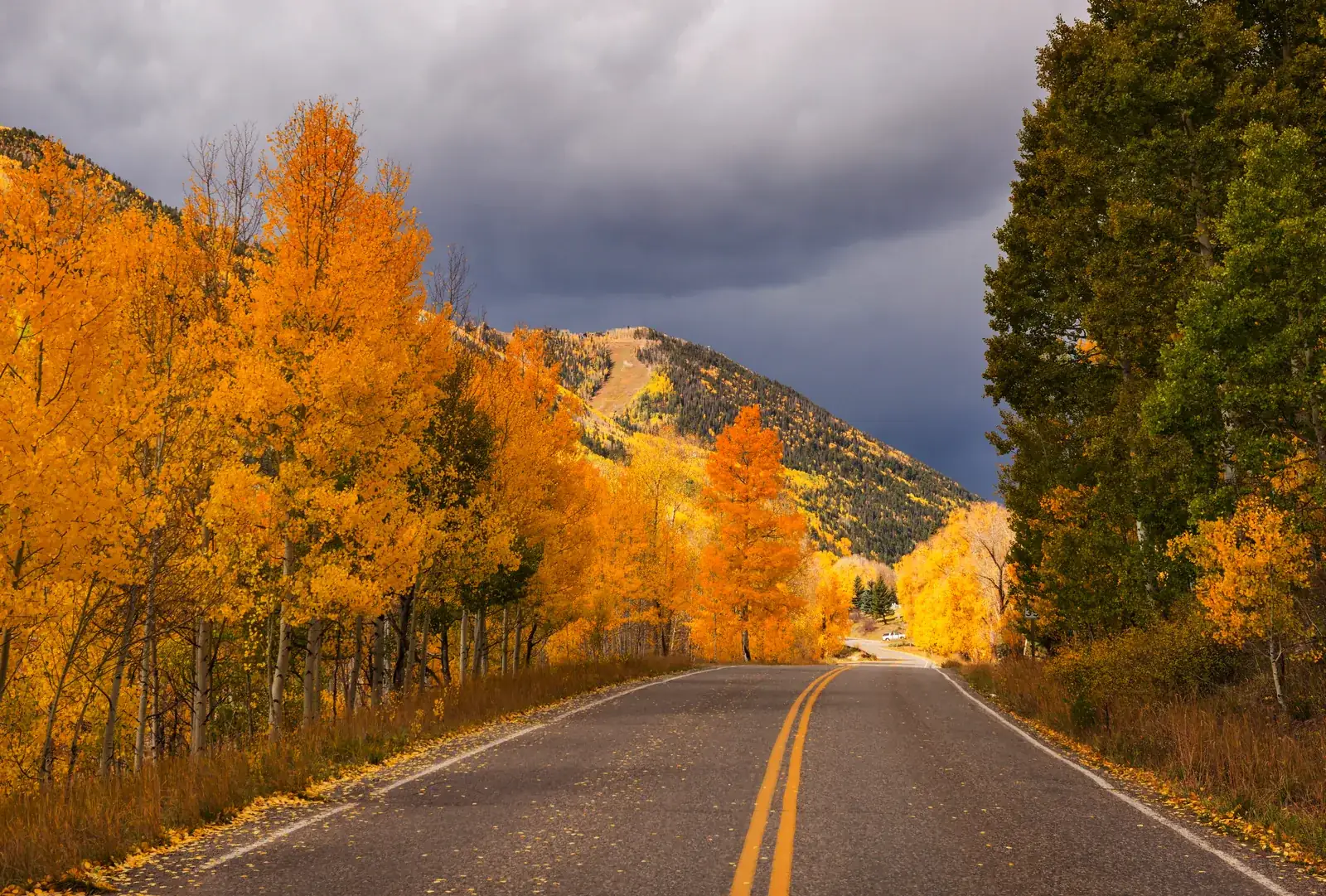
The drive I would build a weekend around is the Peak to Peak Scenic Byway, about 55 miles between Estes Park and Black Hawk, doable in a half day with stops. If you have more time, Kebler Pass outside Crested Butte runs through one of the largest aspen stands in the country, and the Million Dollar Highway between Ouray and Silverton pairs the gold with canyon walls that make your hands tighten on the wheel.
Two stops worth planning: the Bear Lake corridor in Rocky Mountain National Park (a timed-entry reservation is required for that corridor through mid-October, so book on recreation.gov before you go) and downtown Ouray for the classic gold-rimmed box canyon view. Base yourself in Estes Park or Ouray. Fall weekend rooms in both typically run around $150 to $300 a night, checked July 2026, and Ouray’s small inventory sells out first.
Late September to Early October: Northern Vermont on Route 100
Peak window: roughly September 27 to October 8 in the north. This is the trip most people picture when they say “fall foliage,” and the far north of Vermont is where the season opens in the East. Route 100 runs the length of the state, but the stretch that earns the postcards is the roughly 60 miles between Weston and Stowe: white steeples, sugar maples, farm stands still selling actual produce.
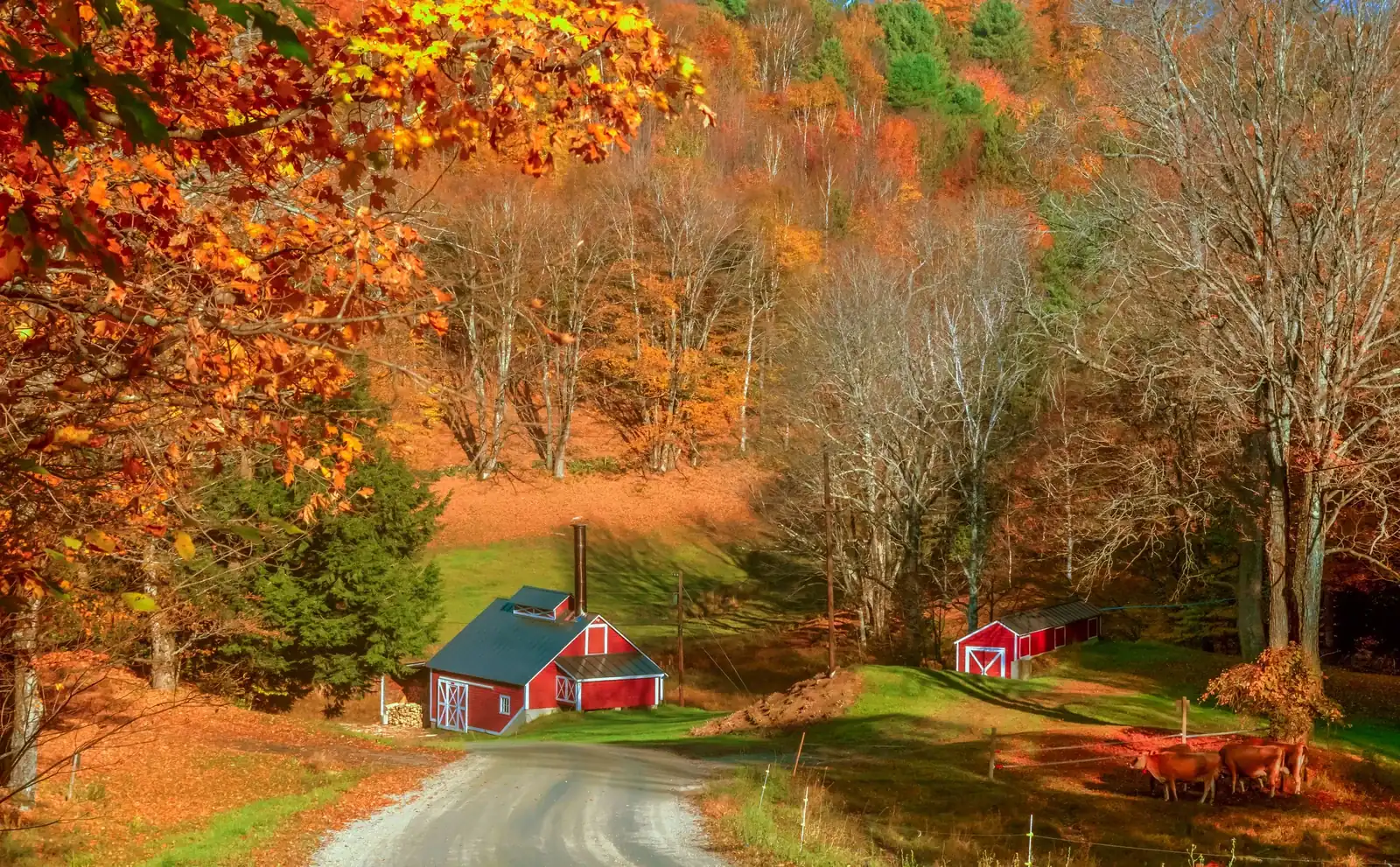
Plan two days: one for the drive itself and one for the detours, because the detours are the point. Smugglers’ Notch (VT-108 north of Stowe) is a narrow, winding pass under full canopy that closes for the winter, so catch it while you can. Moss Glen Falls near Granville is a five-minute walk from the road.
Now the honest part about lodging. Stowe on a peak weekend typically runs $300 to $500 or more a night, often with a two-night minimum, checked July 2026. My rule here is simple: sleep one town over. Waterbury and Morrisville sit 10 to 20 minutes out with rooms typically in the $150 to $250 range, and the maples do not know the difference.
Early to Mid-October: The White Mountains and the Adirondacks
Peak window: roughly October 5 to 15. As northern Vermont fades, the color slides south and east into New Hampshire’s White Mountains and west into New York’s Adirondacks. This is the widest, most forgiving window in the Northeast, and it contains the single best foliage road in America: the Kancamagus Highway.
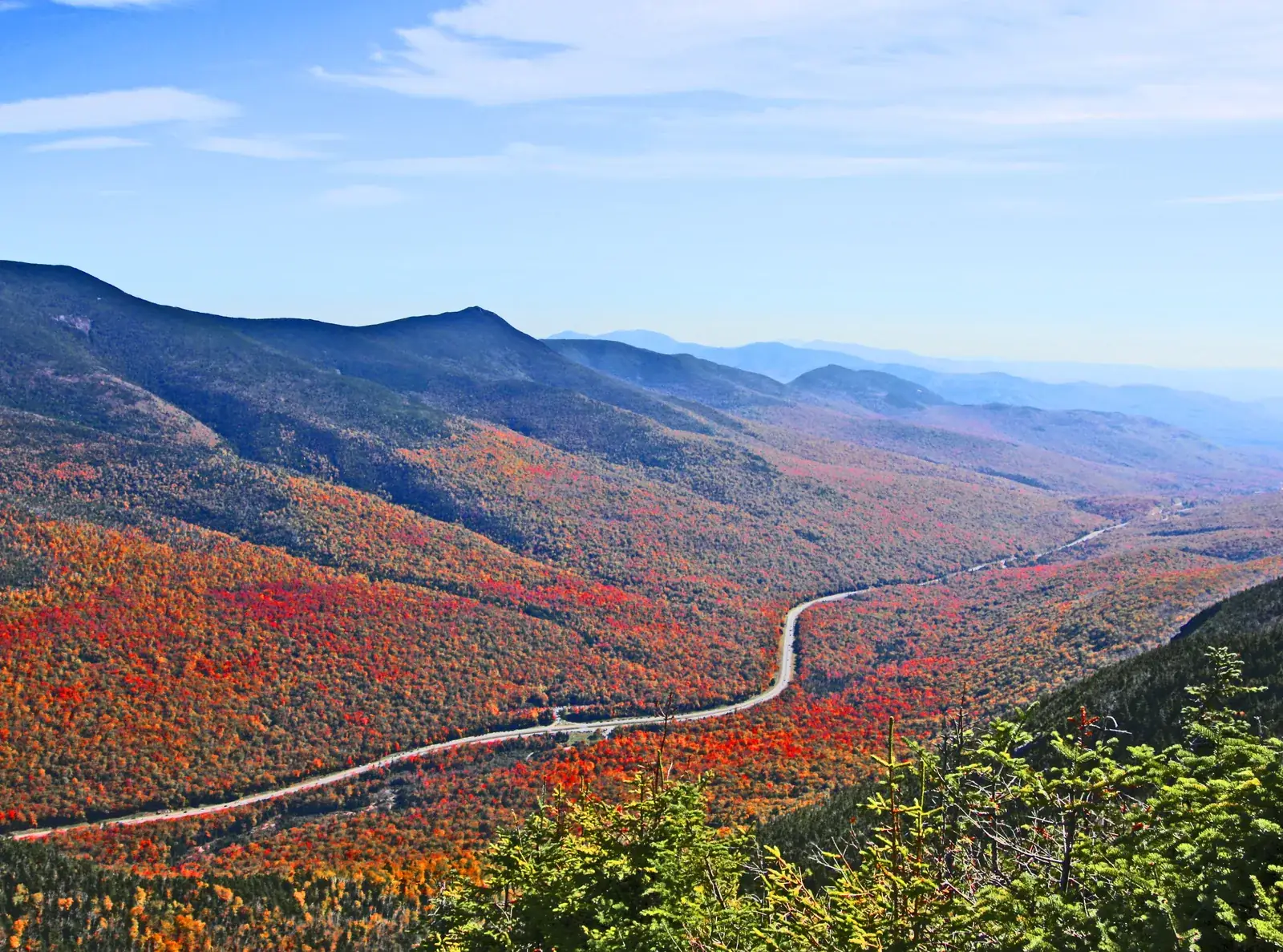
The Kancamagus (NH-112) covers 34.5 miles between Lincoln and Conway with no gas stations, no restaurants, and no billboards along the way. Fill the tank in Lincoln. The drive takes under an hour without stops and half a day with them; Sabbaday Falls and the Hancock Overlook are the two I would not skip. In the Adirondacks, the drive up the Whiteface Veterans’ Memorial Highway near Lake Placid puts the whole High Peaks color show below you, typically for a per-car toll in the $25 to $45 range depending on passengers, checked July 2026.
Base in Lincoln or North Conway for the Whites, Lake Placid for the Adirondacks. Fall weekend rooms typically run $150 to $280 a night, checked July 2026, and both towns book out for the holiday weekend weeks ahead.
Mid-October: The Blue Ridge Parkway
Peak window: roughly October 10 to 22 at the higher elevations. The Parkway is 469 miles long with a 45 mph speed limit, so nobody drives all of it in a weekend. The section to aim for is the roughly 90 miles between Boone and Asheville, North Carolina, which stacks the Linn Cove Viaduct (milepost 304) and Craggy Gardens (around milepost 364) into one day of driving.
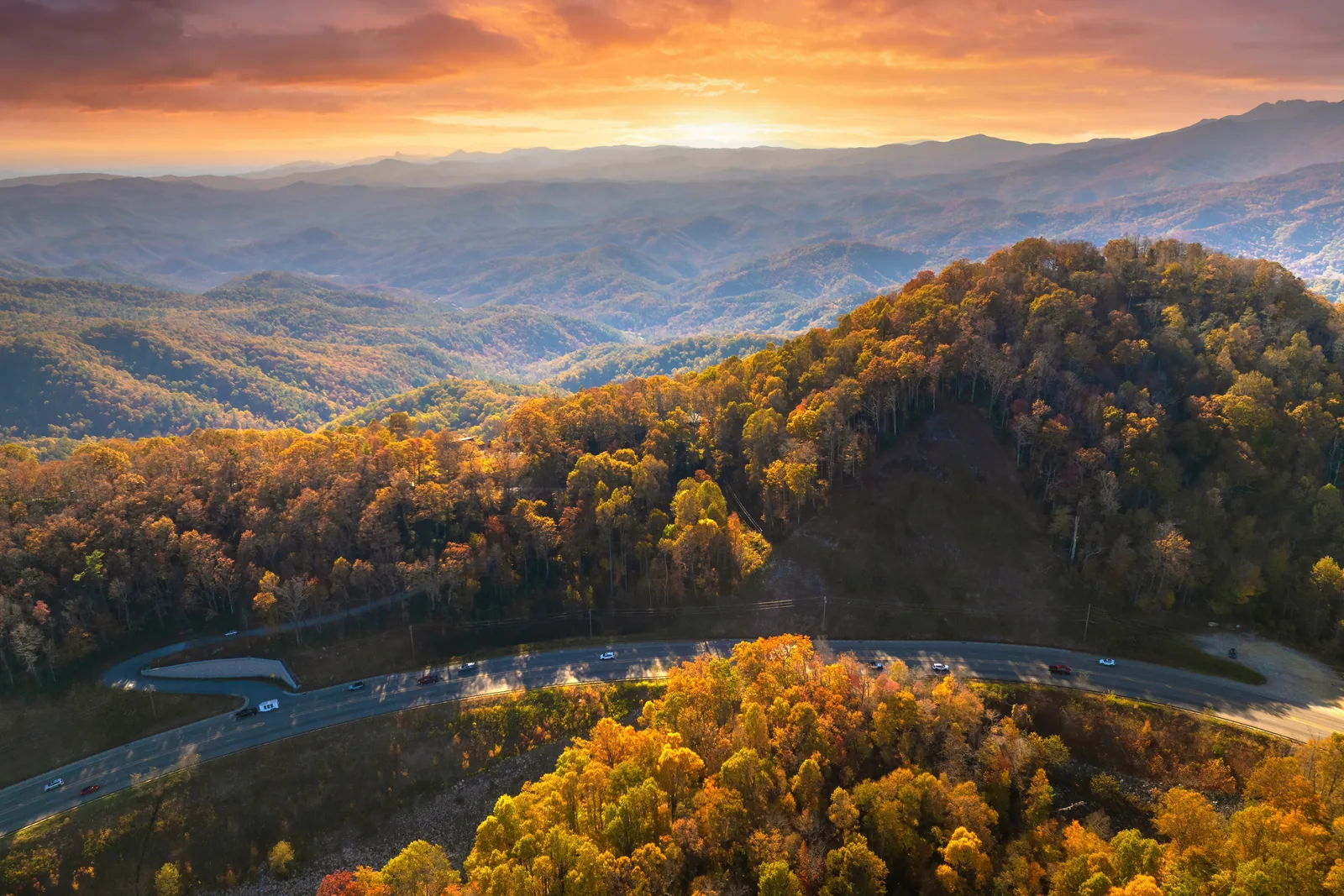
Elevation matters more here than anywhere else on this list. The Parkway climbs from about 650 feet to over 6,000, which means the ridge tops can be past peak while the valleys are barely turning. That is a feature, not a bug: in mid-October you can usually find peak somewhere along the road by simply changing elevation. The National Park Service posts a fall color update for the Parkway each season, and the park’s Facebook page runs a leaf tracker with visitor photos on October Fridays. Check it the week you go, not the month before.
There is no gas on the Parkway itself, so fuel up in Boone or Blowing Rock. Rooms in Boone, Blowing Rock, or Asheville typically run $150 to $300 on October weekends, checked July 2026, with Asheville at the top of that range.
Mid to Late October: The Smoky Mountains
Peak window: roughly October 15 to November 3, sliding downhill. The Smokies stretch the season further than any park in the East. Trees above 5,500 feet start turning as early as mid-September, while the mid and lower elevations that hold the park’s famous sugar maples and scarlet oaks peak from mid-October into early November. The National Park Service notes the display runs about seven weeks top to bottom.
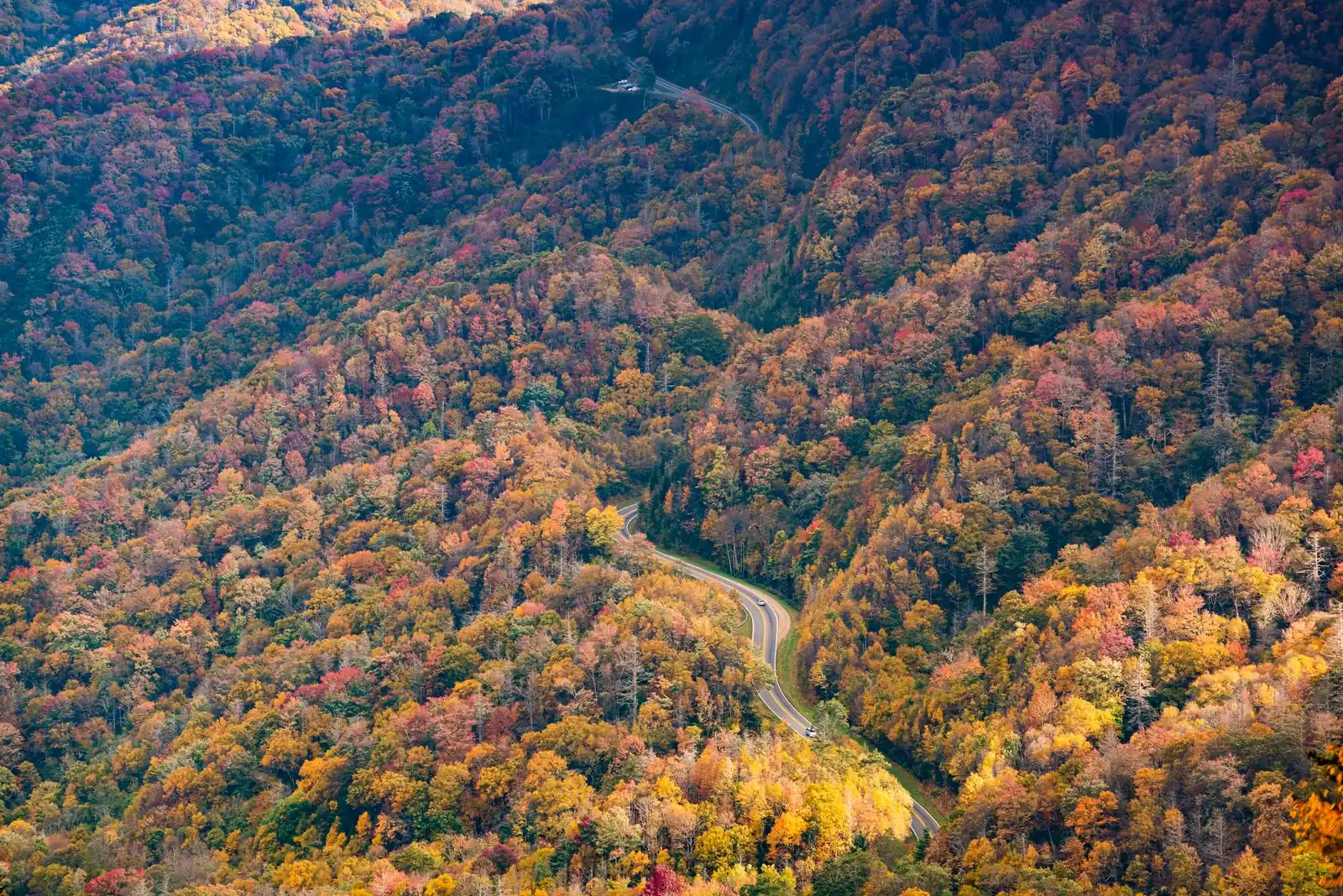
The drive is Newfound Gap Road (US-441), about 31 miles from Gatlinburg, Tennessee to Cherokee, North Carolina, climbing through every color zone the park has. Add the 11-mile Cades Cove loop, and go at 8 a.m. or accept sitting in leaf-season traffic. Two practical notes: parking anywhere in the park for more than 15 minutes requires a parking tag ($5 a day, sold online and at visitor centers), and entry to the park itself remains free.
Gatlinburg cabins typically run $150 to $300 a night in October, checked July 2026. If you would rather skip the fudge shops, Townsend on the quiet side of the park runs cheaper and calmer.
Late October to Mid-November: The Ozarks and Texas Hill Country
Peak window: roughly October 25 to November 15, south and late. This is the stretch of the season nobody plans for, which is exactly why it belongs on the list. When New England is bare, the Arkansas Ozarks are peaking, and Texas is only getting started.
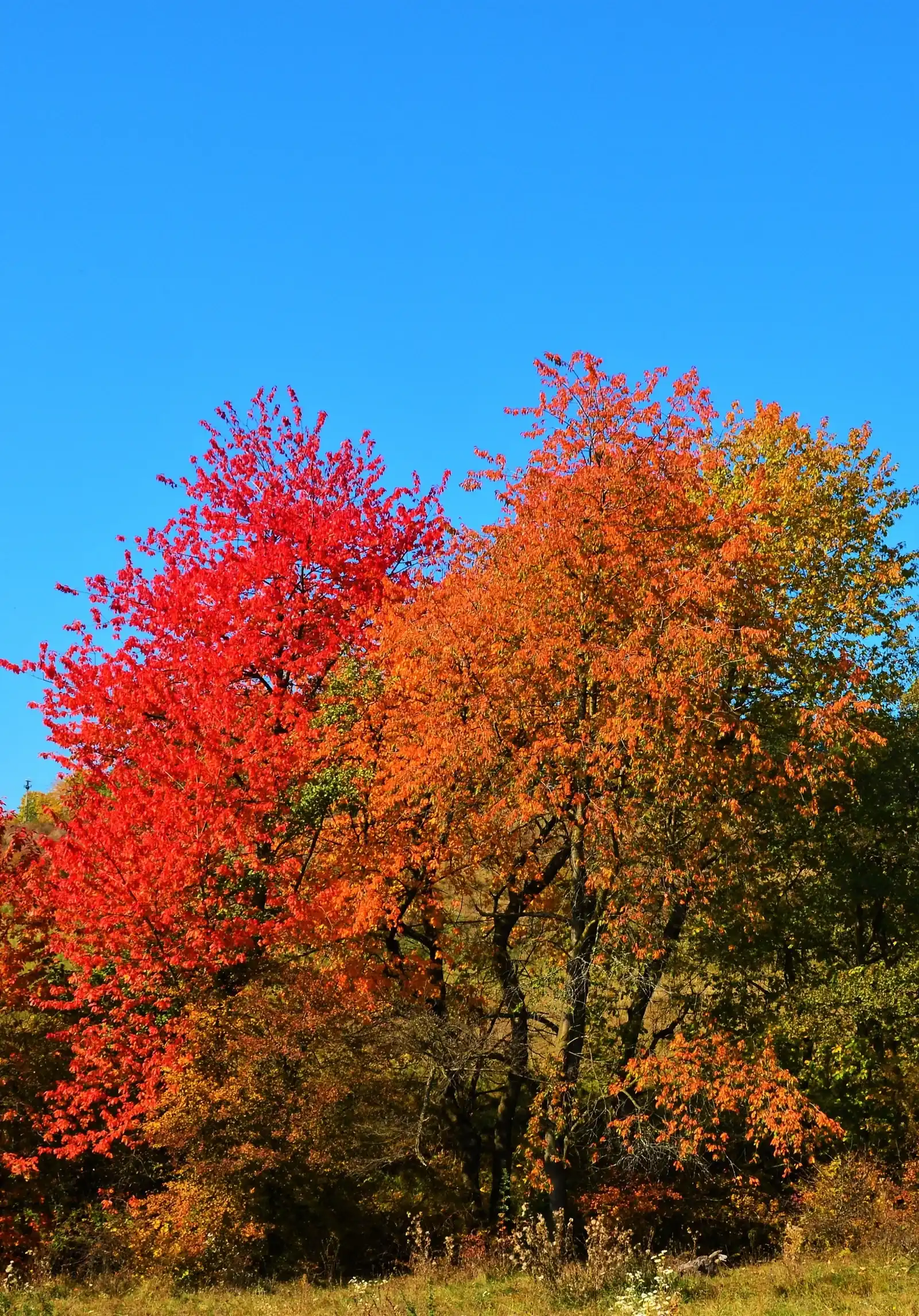
In Arkansas, the Scenic 7 Byway between Russellville and Harrison crosses the Boston Mountains at their best in late October and early November, and the Pig Trail (AR-23) is the shorter, twistier alternative. Eureka Springs makes the natural base, with rooms typically in the $120 to $200 range, checked July 2026.
Then Texas closes the season. Lost Maples State Natural Area near Vanderpool, about two hours northwest of San Antonio, protects a rare stand of Uvalde bigtooth maples that typically turn around Halloween and peak through the first two weeks of November, though the park itself says the show depends on getting a cold front into the 40s. Entry is $6 for adults, the 250-car lot fills daily in season, and there is no cell service inside, so reserve a day pass on the Texas Parks and Wildlife site before you drive out. The park posts a weekly foliage report starting in mid-October; read it before you commit to a date. Pair it with Ranch Road 337 between Leakey and Vanderpool, one leg of the Twisted Sisters, and you have the best driving road in Texas under its best light. Cabins around Vanderpool and Utopia typically run $120 to $220 a night, checked July 2026. If you are building a whole weekend around it, the small towns in Texas Hill Country make the ideal add-on loop.
If You Missed the Peak: Chase South and Down
Chase South and Down is The American Galore’s plan-B rule for missed foliage: if you arrive past peak, drive south in latitude or down in elevation until you find color again. Peak is not an event that ends. It is a wave that moves, roughly north to south and high to low, for about eight weeks. Your job is to get back in front of it.
In practice:
- Past peak in Stowe? Drive two hours south. Southern Vermont and the Berkshires typically run a week to ten days behind the Northeast Kingdom.
- Bare ridge tops on the Blue Ridge Parkway? Drop off the Parkway into the valley towns. A 3,000-foot elevation drop can buy back a full week of color.
- Smokies fading at Newfound Gap? The lower elevations around Cades Cove and the foothills peak later. Go down, not home.
- Everything north is done and it is November? The Ozarks and the Hill Country are your safety net. Lost Maples regularly holds color into mid-November.
The one direction that never works is waiting. Color does not come back to a hillside that has dropped. South and down, always.
Beating the Crowds
Foliage crowds are predictable, which means they are avoidable. What actually works:
- Go Tuesday through Thursday. The gap between a Saturday and a Wednesday on the Kancamagus is the difference between a traffic jam and a private road. If you only have weekends, this is the strongest argument for burning a vacation day all year.
- Drive at sunrise. The tour buses roll out mid-morning. From 7 to 9 a.m. you get empty overlooks and the best light of the day at the same time.
- Skip the holiday weekend or accept it fully. Columbus Day weekend (October 10 to 12 in 2026) is peak New England chaos. If it is your only option, book lodging now and drive the secondary roads.
- Learn the parallel roads. VT-100 has traffic; the gravel roads one ridge over have cows. Along the Kancamagus corridor, the Bear Notch Road cutoff thins out fast. Near the Smokies, locals use the Foothills Parkway and the Cosby entrance while everyone else idles into Gatlinburg.
- Book refundable and decide late. The single best crowd-and-timing move is holding a refundable room and making the final call ten days out, once the trackers firm up.
The Two Trackers Worth Using (and How to Use Them)
Two free tools do most of the work, and they do different jobs.
The SmokyMountains.com fall foliage prediction map has run every year since 2013. It covers the whole country county by county, with a weekly slider from early September to mid-November, built on historical and forecast temperature data plus user reports. Its job is the big picture: use it in August to pick your week and region. The 2026 edition typically goes live in late summer.
Explore Fall’s map updates daily during the season from reports gathered around the country. Its job is the final call: check it ten days to two weeks before you leave to see whether the season is running early or late, and adjust. For specific destinations, layer in the local sources, which are usually the most honest of all: Vermont’s official foliage report, the Blue Ridge Parkway’s fall color page from the National Park Service, and the Lost Maples weekly report from Texas Parks and Wildlife.
The pattern that matters: prediction map for the plan, live map for the trigger, local report for the truth on the ground. Early signals for 2026 in New England point to a season running slightly later than average after a dry spring, which is one more reason to hold your booking flexible and check again in September.
Mistakes That Ruin Foliage Trips
- Booking a date without checking a prediction map first. The most common mistake and the most avoidable one. Ten minutes on the map in August saves a wasted weekend in October.
- Locking in Columbus Day weekend by default. It feels like the obvious foliage weekend. In northern New England it is often a few days past the northern peak and always the worst crowds of the year.
- Betting everything on one exact spot. Weather strips individual hillsides overnight. Plan a drive, not a viewpoint, so one bare ridge cannot sink the trip.
- Ignoring elevation. Checking “peak in North Carolina” tells you almost nothing on a road that climbs a vertical mile. Check the elevation of the actual overlook you care about.
- Skipping the gas math. The Kancamagus and the Blue Ridge Parkway have no gas stations on the road itself. Full tank at the trailhead town, every time.
- Ending the season in October. The best-kept secret in this article is that Texas peaks in November. If you missed everything else, you have not missed everything.
FAQ
When is peak foliage in New England in 2026?
Northern Vermont, northern New Hampshire, and northwestern Maine typically peak from late September through the first week of October, with southern New England following through mid to late October. Early 2026 forecasts suggest a slightly later season than average, so confirm on a live tracker about two weeks before your trip.
What is the best week for fall foliage in the Smoky Mountains?
For the classic mid and low elevation color along Newfound Gap Road and Cades Cove, target the last two weeks of October. The highest elevations above 5,500 feet turn from late September, and lower valleys hold color into early November, so the park offers some peak for about seven weeks.
How long does peak foliage last in one place?
Typically one to two weeks in any single location, though a windstorm or heavy rain near peak can end it in a day. That is why flexible bookings beat locked ones, and why planning a driving route through varied elevation is safer than betting on one viewpoint.
Can I still see fall color in November?
Yes, if you go south. The Arkansas Ozarks hold color into early November, and Texas Hill Country peaks latest of all: the bigtooth maples at Lost Maples typically turn around Halloween and peak through the first two weeks of November, depending on when the first real cold front arrives.
Where is peak foliage in early October versus late October?
Early October belongs to the White Mountains, the Adirondacks, southern Vermont, and Colorado’s last high-country aspens. Late October belongs to the Blue Ridge Parkway’s lower elevations, the Smokies, and the Ozarks. As a rule, the wave moves south and downhill about 100 to 200 miles per week.
Plan the Week, Not the Place
Every disappointing foliage trip I have ever heard about comes down to the same reversed decision: the place was chosen first and the date was hoped for. Flip it. Pick the week you can actually travel, read the table, and go where that week is peaking. The color is always somewhere between late September and mid-November. Your only job is to be under it.
When the trip is done, the season does not have to be. fall porch decor by budget is how you bring it home, and if the Blue Ridge stretch won you over, our full Blue Ridge Parkway overlook guide is coming this summer.
Prices in this guide were checked at publication and are shown as typical ranges. How we check facts and prices →