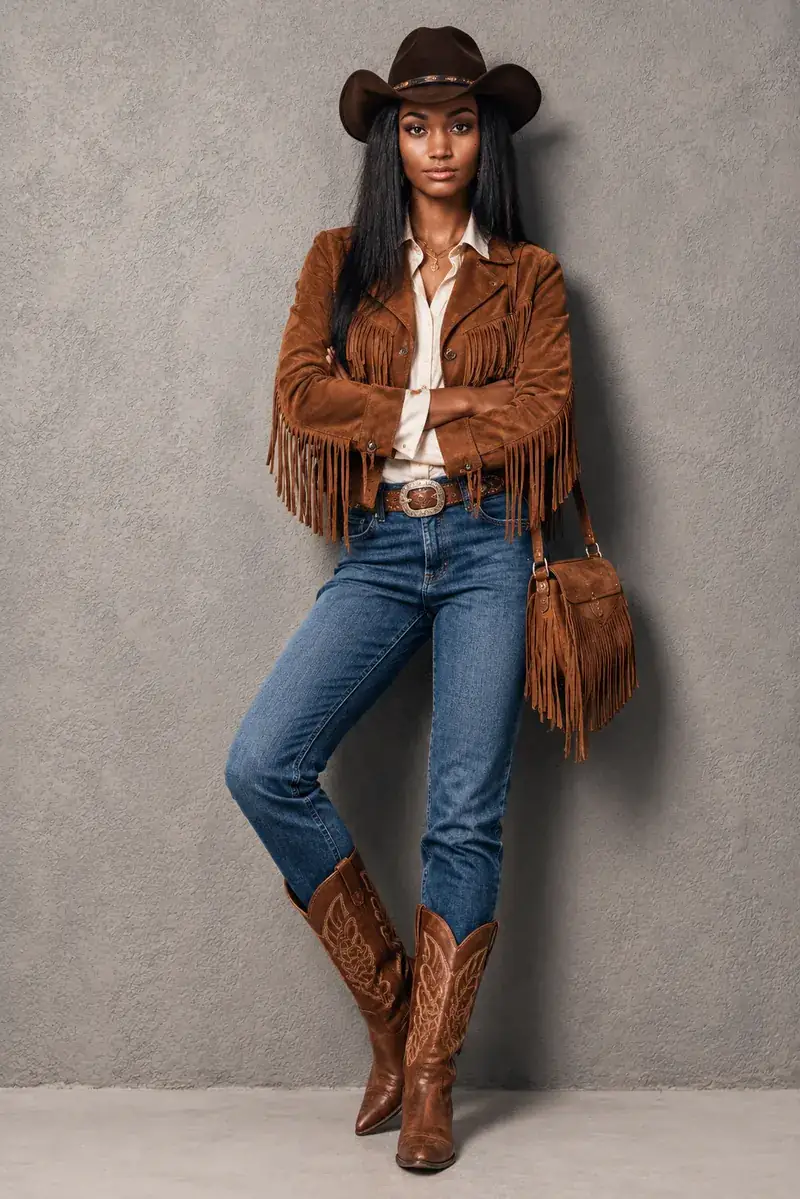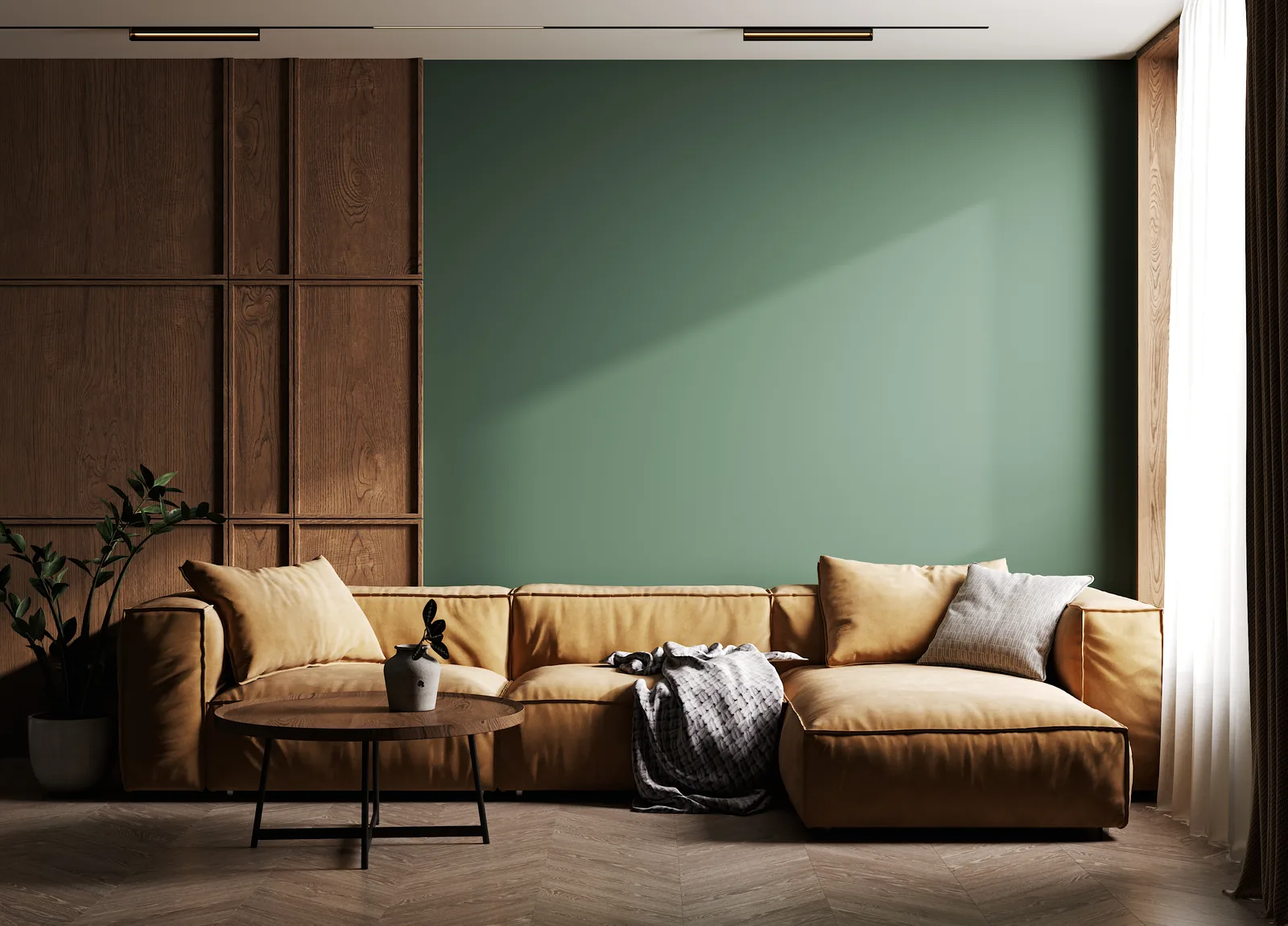
Rust and sage are the color pairing of the moment. You have seen it on a hundred sofas and in every fall collection, and you have probably noticed that nobody explains it: why these two, what completes them, and how much of each. The pairing gets treated as a vibe when it is actually a system.
We named the system, because it is literally ours. The palette below is the one this site is built on, in our logo, our pins, and every room we publish. This article is its official home: why the duo works, the two colors that complete it, the ratios by room, and a $100 test that lets you try the whole thing before a single wall gets painted.
Why Rust and Sage Work (The Warm-Cool Balance)
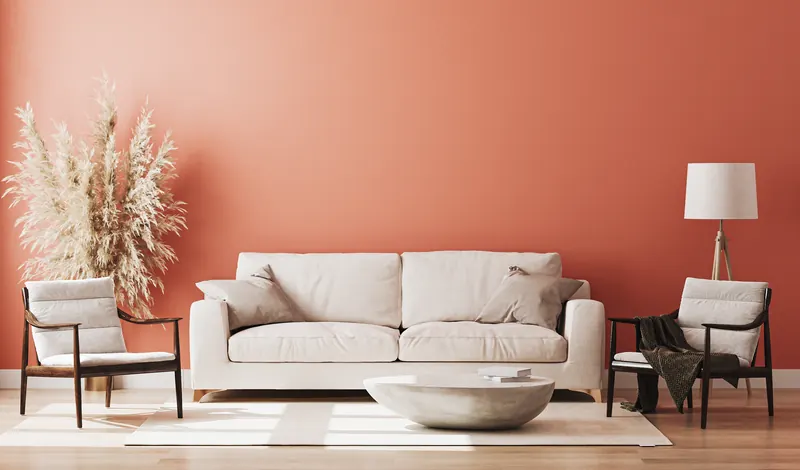
Rust and sage work because they are a natural warm-cool pair: rust is a deep, browned orange, and sage is a grayed, muted green, which sits opposite orange on the color wheel. The graying and browning is the secret. Pure orange plus pure green is a sports team; muted clay plus dusty green is a desert hillside. Each calms the other, which is why the pairing reads restful instead of loud.
The Full Sunbaked Palette
The Sunbaked Palette is The American Galore’s four-color decorating system built around rust, sage, cream, and mustard. Rust brings the warmth, sage cools it, cream carries the room, and mustard is the light that makes the other three glow. Four colors, one landscape: the American desert an hour before sunset.
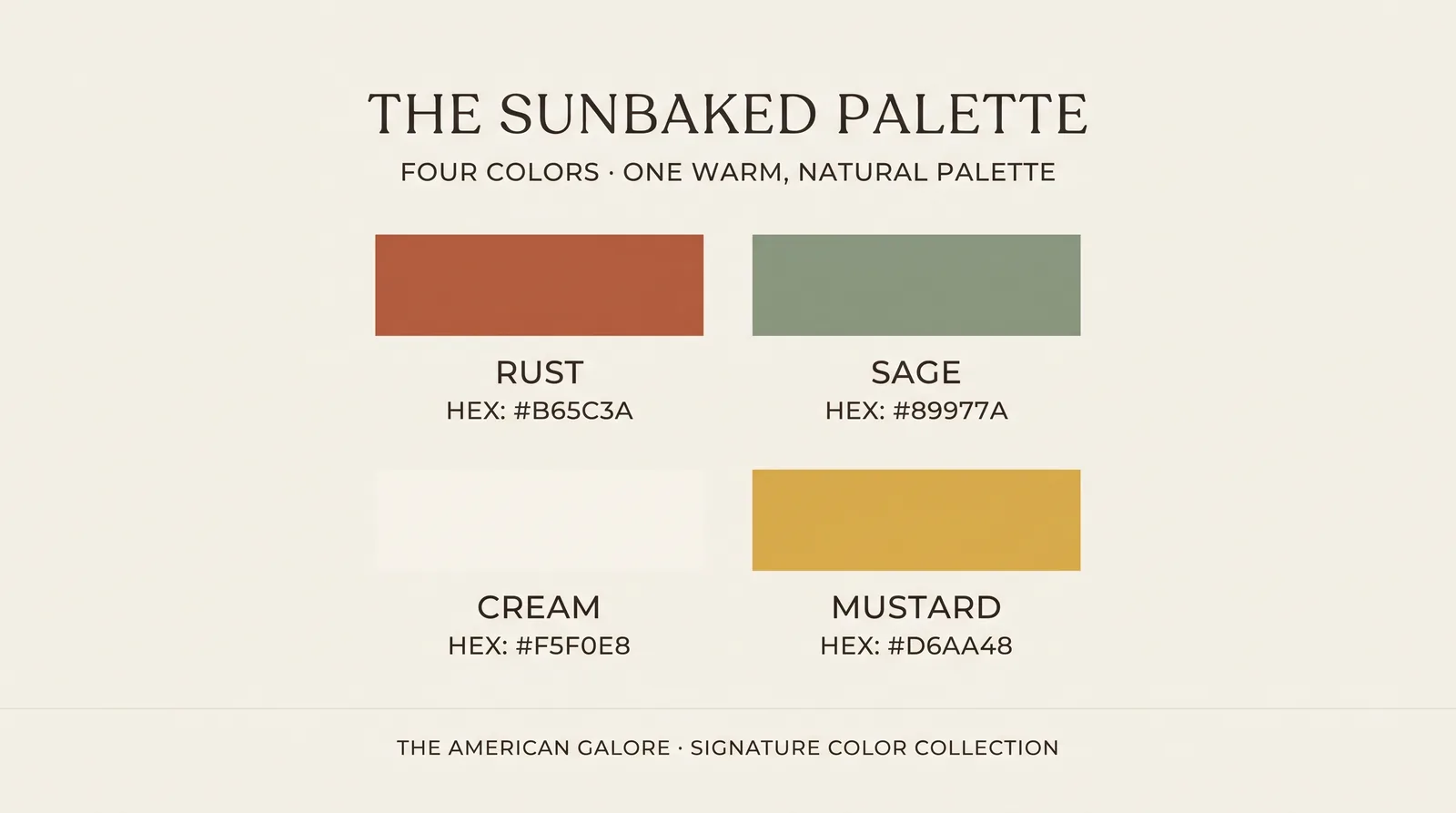
How the four divide the work, in rough proportions borrowed from the classic 60-30-10 and adapted for a fourth player: cream takes about 60 percent of the room, sage and rust split about 30 between them with one leading, and mustard takes the last 10 as pure accent. Which of sage or rust leads is the main stylistic decision in any Sunbaked room, and the room-by-room section below settles it.
The Under-$100 Textile Test
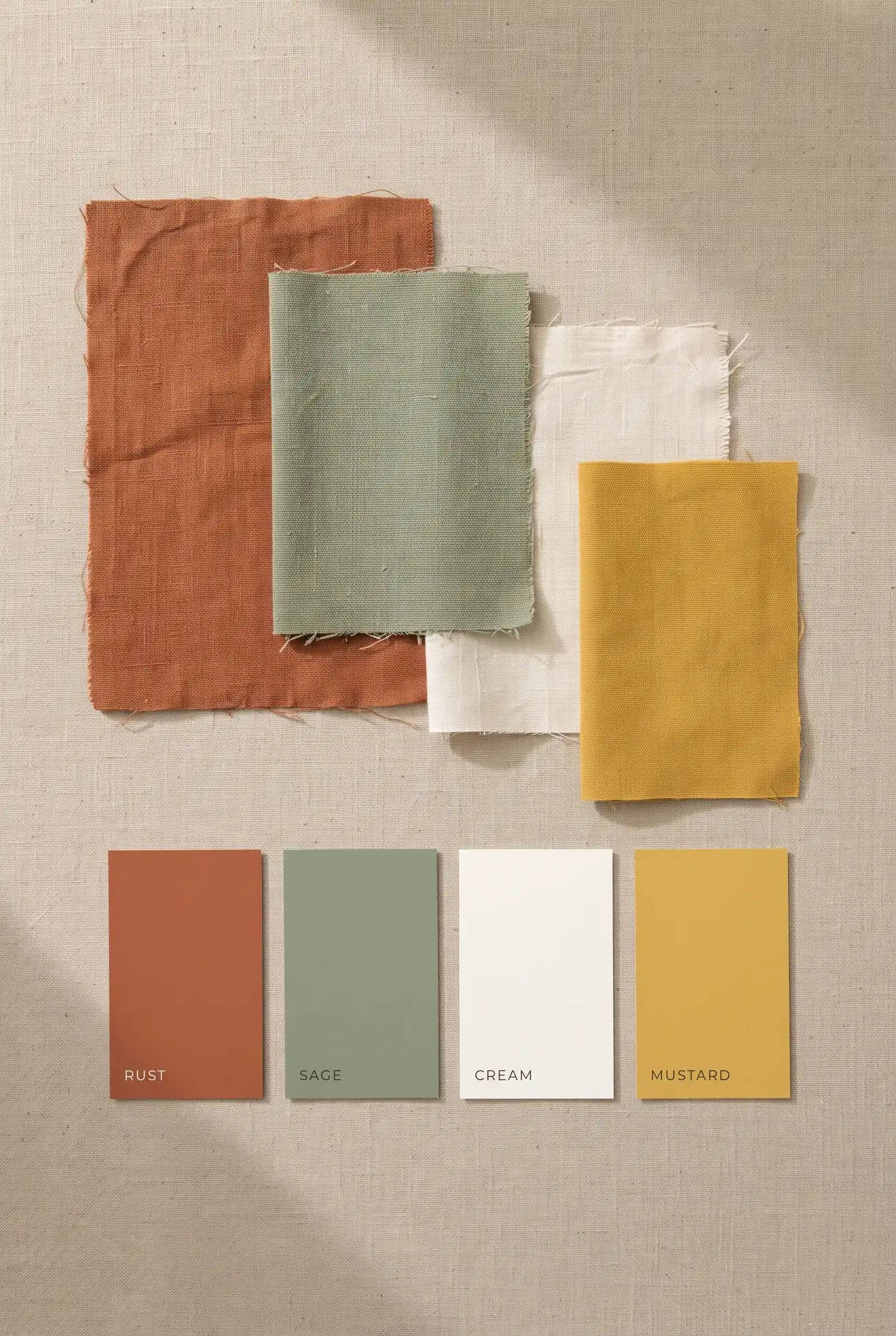
The Under-$100 Textile Test is the way to try the Sunbaked Palette before committing paint: bring the four colors in as textiles first, live with them for two weeks, then decide. Fabric is reversible; a gallon is a weekend.
The test cart, at typical July 2026 prices:
| Item | Color | Typical price |
|---|---|---|
| 2 throw pillow covers | Rust | ~$25 (Target, H&M Home) |
| 1 throw blanket | Sage | ~$30 |
| 1 table runner or tea towels | Mustard | ~$18 |
| 1 pillow cover or small throw | Cream | ~$20 |
| Total | ~$93 |
Distribute them across the existing room, wait two weeks, and watch two things: whether the rust still pleases you at night under lamps, and whether the mustard reads as light or as loud. If both pass, the palette fits your room and your life, and the paint decision below is already half made.
Room by Room
Living Room
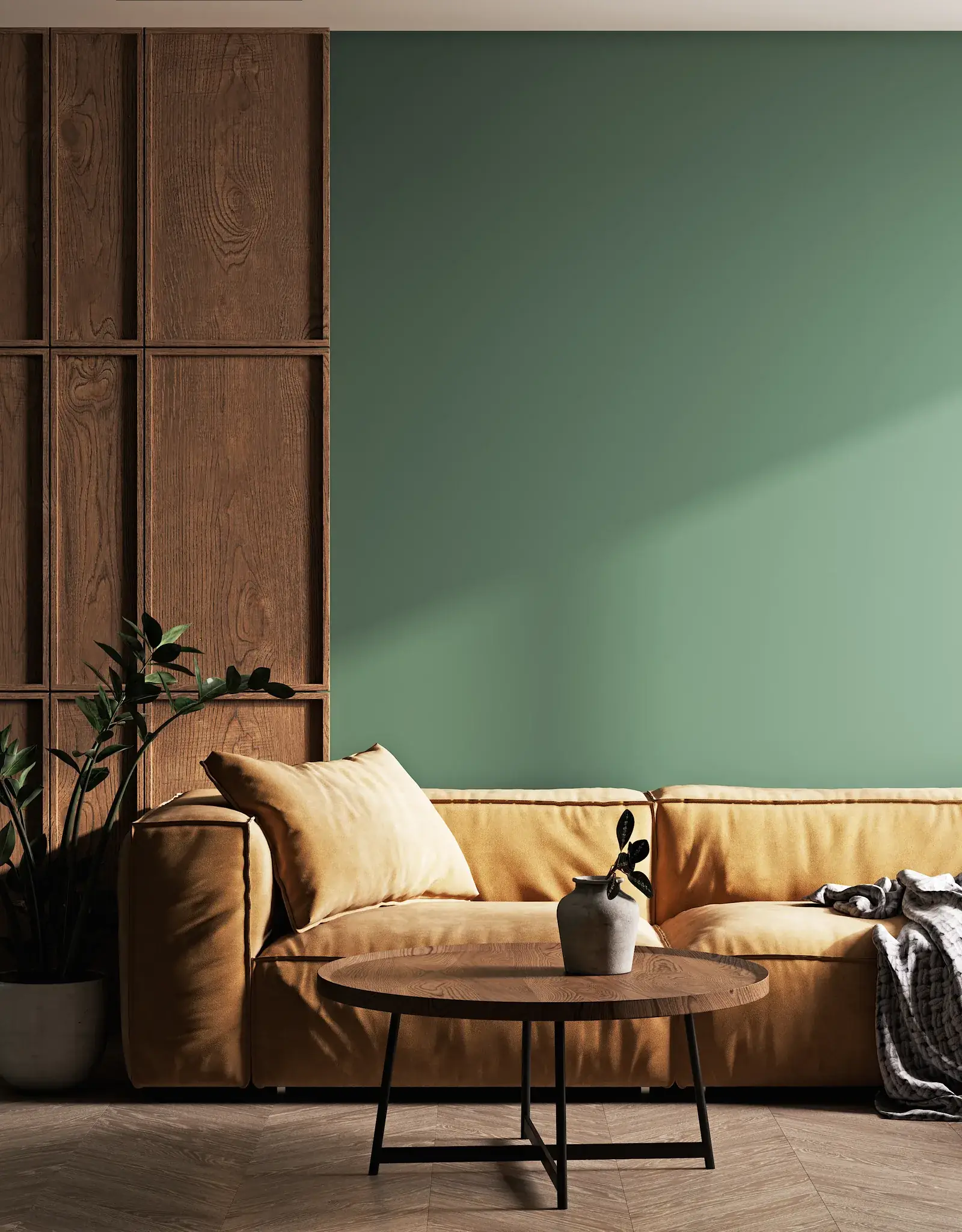
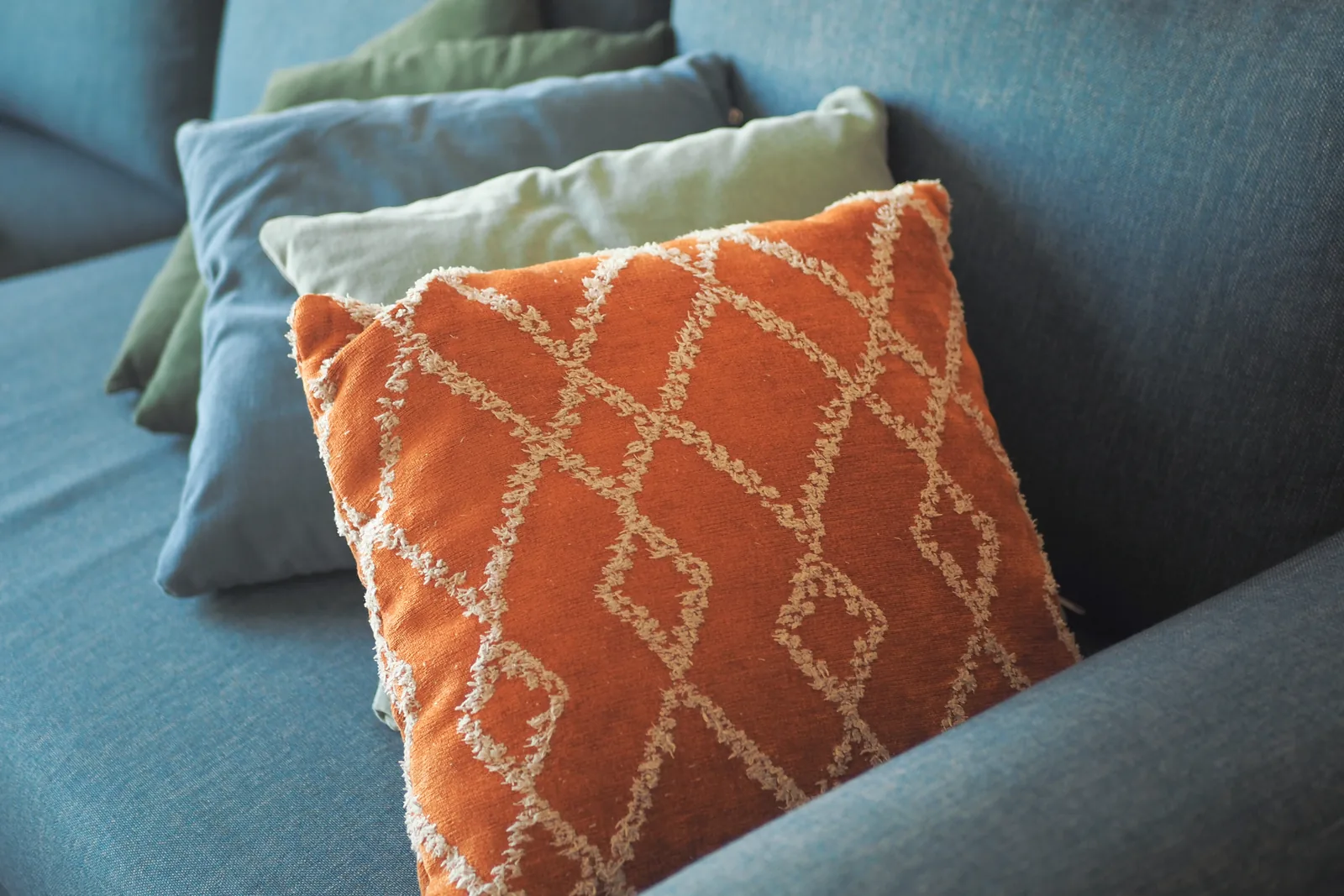
Sage-led or rust-led both work here; the light decides. Bright rooms carry a rust anchor (one wall or the large rug); dimmer rooms do better sage-led with rust in textiles. Ratio: cream 60, lead color 20, second color 10, mustard 10. The strong idea: a rust-toned vintage-style rug under a cream sofa, sage in two cushions, one mustard throw folded visibly.
Bedroom
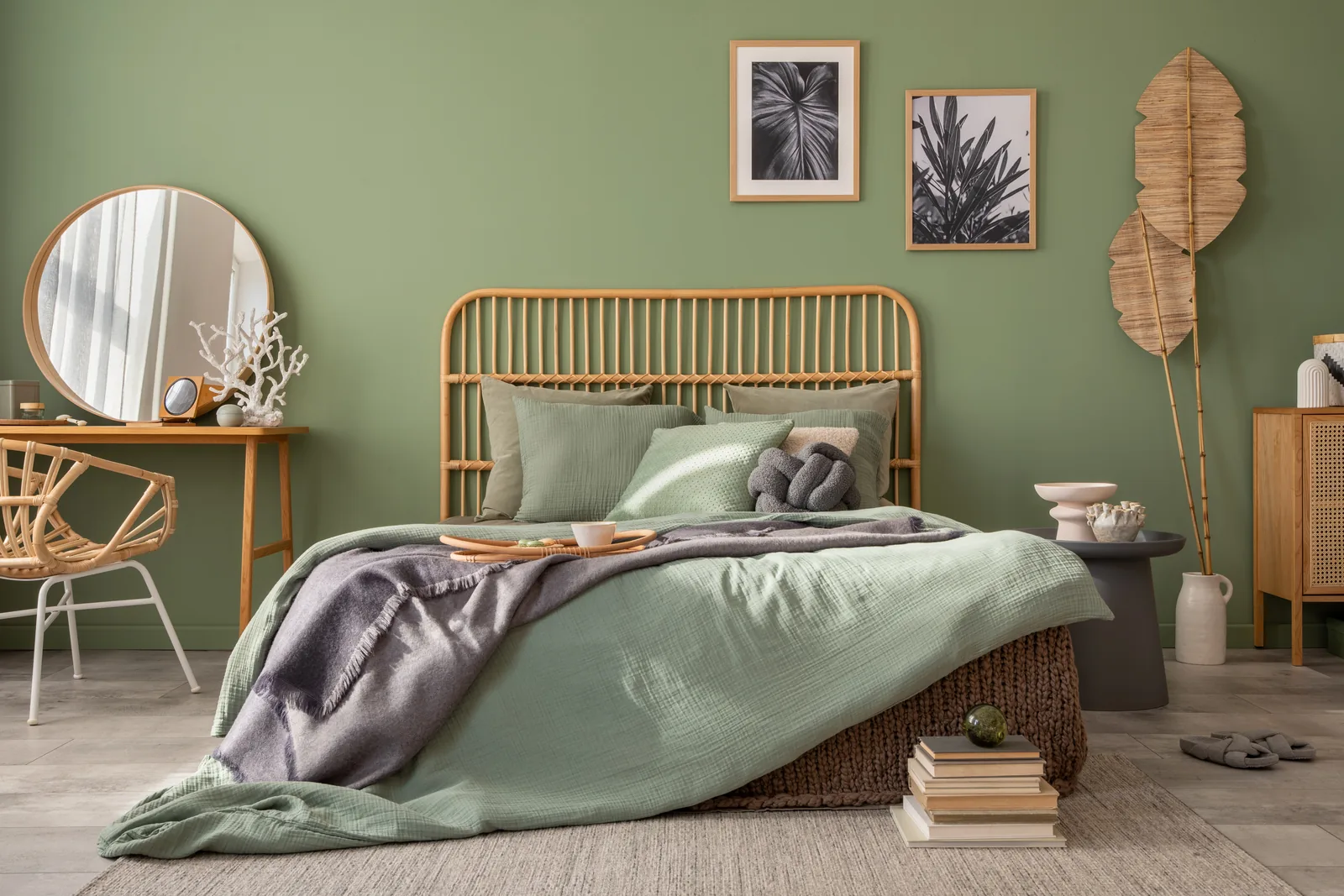
Sage leads, always, in my view: it is the palette’s calmest player and the bedroom is where calm pays. Cream bedding, sage on the wall behind the bed or in the euro shams, rust folded at the foot, mustard in one lamp or one artwork. Ratio: 60 cream, 25 sage, 10 rust, 5 mustard.
Kitchen
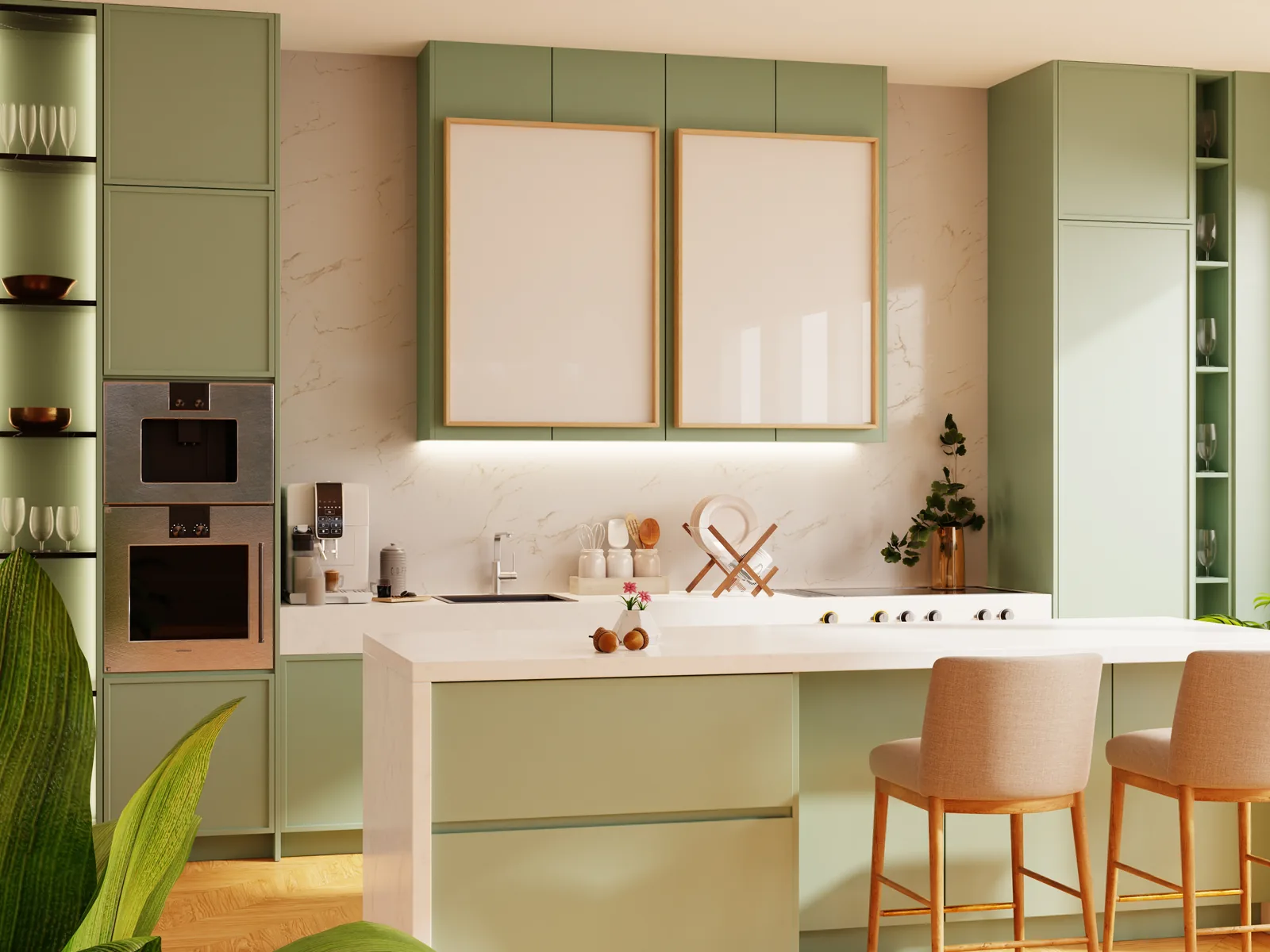
Mustard finally gets to lead an accent role beyond ten percent: a mustard runner, mustard-toned stools, or ceramics against sage-painted lower cabinets. Rust arrives in terracotta pots and dinnerware rather than paint. Ratio: 60 cream, 25 sage, 10 mustard, 5 rust. The palette’s cheapest kitchen entry is a $40 stack of clay-toned dinnerware doing daily duty.
Bathroom
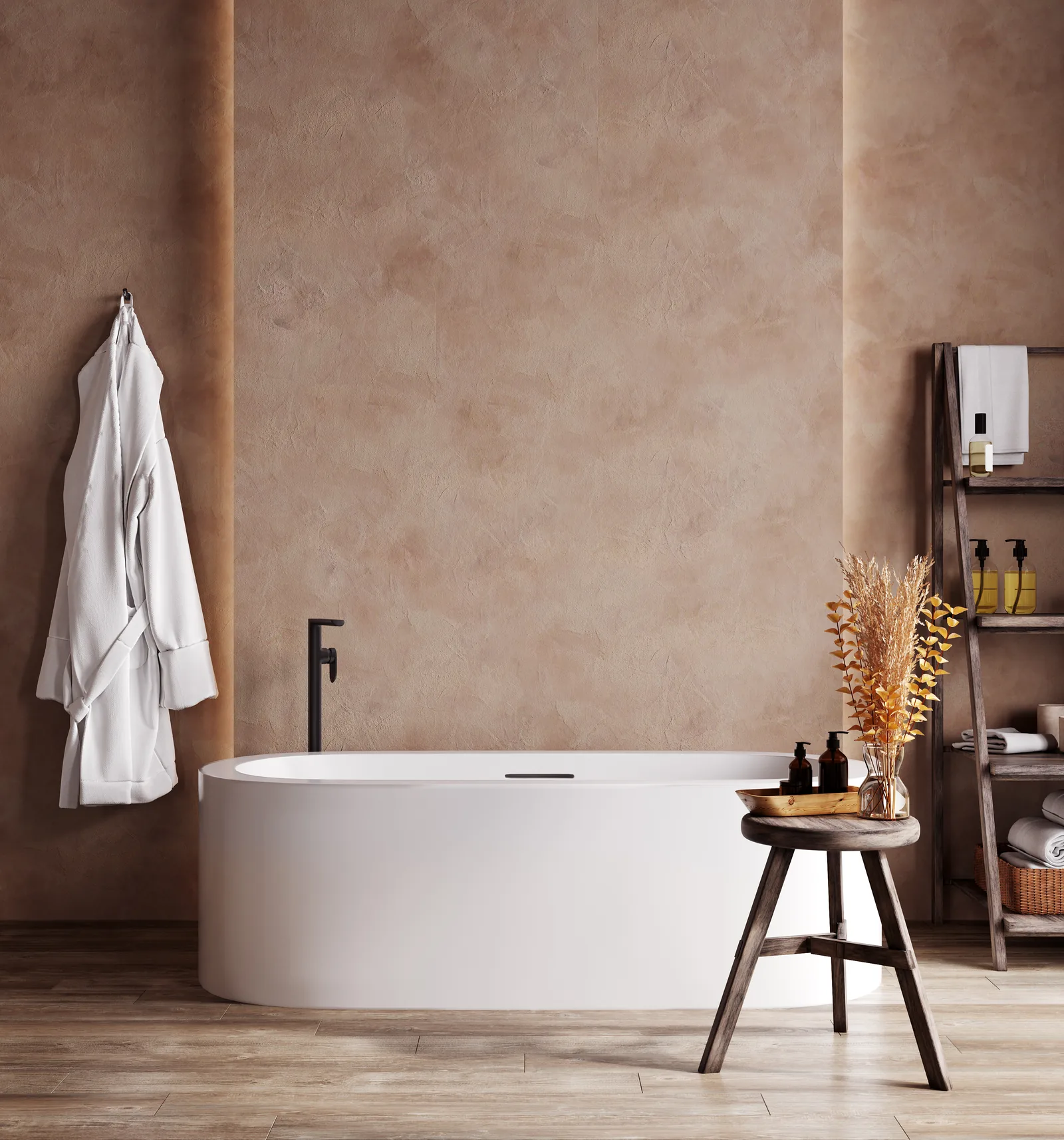
The smallest room takes the boldest move: rust-led. A rust vanity wall or rust towels against cream tile, sage in the plants (real ones; bathrooms love ferns), mustard absent or reduced to a soap dish. Ratio: 70 cream, 20 rust, 10 sage. Small rooms forgive strong color because you never stay long.
Exact Shades to Use
The relay table from our full paint guide; every shade below is documented there with LRV and room guidance in the 9 terracotta palettes with paint names.
| Palette color | The shade | LRV |
|---|---|---|
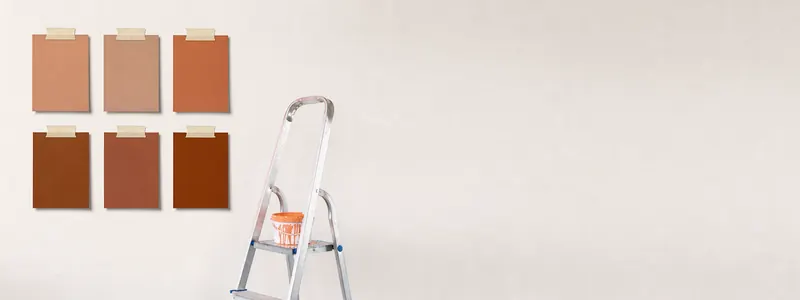
| Rust | Sherwin-Williams Cavern Clay SW 7701 | 20 |
| Rust (softer) | Sherwin-Williams Redend Point SW 9081 | 30 |
| Sage | Sherwin-Williams Clary Sage SW 6178 | 41 |
| Sage (deeper) | Sherwin-Williams Evergreen Fog SW 9130 | 30 |
| Cream | Sherwin-Williams Alabaster SW 7008 | 82 |
| Mustard | Sherwin-Williams Cut the Mustard SW 6384 | 26 |
Mistakes
- The 50/50 split. Equal rust and sage cancel each other into mud. One always leads; the ratios above are the fix.
- Gray-heavy sage. Sage with too much gray goes cold and drops out of the palette. Test it next to the rust: if the pair looks like autumn, it is right; if it looks like a rainy day, the sage is too gray.
- Orange masquerading as rust. Rust is browned. Bright orange reads Halloween next to sage. When in doubt, darker.
- Skipping cream’s 60 percent. The palette fails most often by enthusiasm: four strong colors with no cream field to rest in. Cream is not the boring part; it is the canvas.
- Mustard in large doses. Ten percent is a law, not a suggestion. Mustard is the palette’s espresso.
FAQ
Do rust and sage go together?
Yes, they are a natural pairing: rust is a browned orange and sage is a muted green, near-complements on the color wheel with their intensity dialed down. The muting is what makes the combination restful rather than loud, and it is the founding duo of the Sunbaked Palette.
What colors complete rust and sage?
Cream and mustard. Cream provides the 60 percent field that lets both colors breathe, and mustard adds the warm light accent at about 10 percent. Together the four form the Sunbaked Palette, The American Galore’s four-color decorating system for warm, desert-rooted rooms.
Which rooms suit a rust and sage palette?
All of them, with different leaders: sage leads bedrooms and kitchens for calm, rust leads living rooms with good light and small bold bathrooms, and cream carries about 60 percent everywhere. The palette’s flexibility across rooms is exactly why it works as a whole-home system.
Is sage green still popular in 2026?
Yes; sage has outlasted its trend phase and settled in as the era’s default soft green, appearing across paint brands’ recent Colors of the Year and permanent retail collections. Its staying power comes from behaving like a neutral while still reading as color, which is the role it plays in the Sunbaked Palette.
The Palette Is the Point of View
Four colors, one landscape, and now a name you will see across everything we publish. Run the $93 test, let the two weeks decide, and then commit with the exact shades above. The full paint depth is in terracotta palettes with exact paint names, the rooms it builds are in southwestern decor ideas, and come September the same four colors walk straight out the front door: the fall porch by budget.
Prices in this guide were checked at publication and are shown as typical ranges. How we check facts and prices →